
Jack bean
Canavalia gladiata (Jacq.) DC.
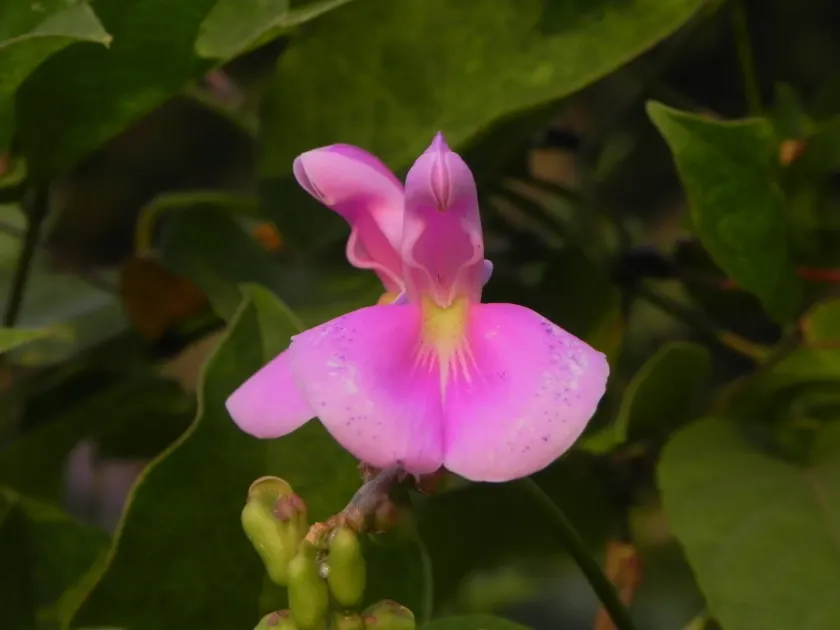
Description
Sowing dates
Jack bean (Canavalia gladiata) is a vigorous annual legume widely grown in tropical and subtropical regions. It is typically sown when soil temperatures reach at least 18–20 degrees Celsius, ensuring optimal germination rates for the large seeds.
The seeds should be planted at a depth of 3 to 5 centimeters. Proper spacing is essential, with rows set 60–90 centimeters apart to accommodate the plant's aggressive climbing nature and extensive vegetative growth.
Using stakes or trellises is a common practice in commercial fields, as vertical growth significantly improves airflow and facilitates easier harvesting. This also helps in reducing the incidence of soil-borne fungal diseases.
Inoculation of seeds with appropriate Rhizobium strains is highly recommended to enhance nitrogen fixation. This process reduces reliance on synthetic nitrogen fertilizers, making the crop an excellent choice for sustainable agricultural practices.
Planting usually occurs at the onset of the wet season, which provides the necessary moisture for early development. Once established, the plants show remarkable vigor, quickly covering the support structures provided.
Growing requirements
Jack bean thrives in warm climates, ideally with temperatures ranging between 22 and 30 degrees Celsius. The plant is sensitive to frost and extreme cold, which can terminate the growing cycle prematurely.
While tolerant of a wide range of soils, the crop performs best in well-drained loams. It does not tolerate waterlogged conditions, which can lead to rapid root decay and yield loss, thus proper land drainage is mandatory.
The crop requires full sun exposure for optimal growth and fruit production. Shady environments result in excessive vegetative growth at the expense of flower development, leading to significantly lower yields of beans.
Soil pH levels should ideally fall between 6.0 and 7.5. On highly acidic soils, liming is suggested to improve nutrient availability, particularly phosphorus, which is vital for pod formation in legumes.
Although the crop has a deep root system that helps it withstand short dry spells, supplemental irrigation is beneficial during the flowering and pod-filling stages to ensure maximum development of the beans.
Yield
Yield performance for Jack bean is substantial when managed correctly. The crop can produce high volumes of biomass, often reaching 10–20 tonnes per hectare, depending on local fertility and water availability.
For seed production, yields vary significantly based on the length of the growing season and the intensity of solar radiation. The plant produces long, distinct pods, often measuring up to 30 centimeters in length.
Strategic management of plant density can optimize yields. High-density planting increases total biomass, while wider spacing encourages more robust pod production per individual plant, making it a flexible crop for different management systems.
The harvest period is typically prolonged, allowing for multiple selective pickings in smaller-scale farming. This contributes to a consistent food supply or feed stock throughout the active growing season.
Consistent agricultural practices, including effective weed control in the early weeks, are critical to ensuring the plant channels its energy into pod and seed development rather than competing for nutrients.
Main diseases and pests
Aphids are the most common pests affecting Jack bean, clustering on new growth and causing leaves to curl. Biological control or selective insecticides are recommended to keep populations in check during early development.
Anthracnose and other fungal leaf spot diseases are prevalent during periods of high humidity. Preventive measures such as increasing row spacing and ensuring proper trellis ventilation are effective in reducing infection rates.
Root rot caused by soil fungi like Fusarium can become an issue if the field suffers from inadequate drainage. Maintaining strict irrigation protocols and choosing elevated land for planting are primary defenses against this threat.
Nematodes may pose a challenge in some tropical soils, potentially weakening the root system. Utilizing resistant varieties and practicing crop rotation with non-leguminous plants are essential for sustainable management.
- Implement regular field inspections for early pest detection.
- Ensure weed-free zones around the base of the plants to reduce moisture stagnation.
- Remove and dispose of diseased plant material immediately to prevent spreading.
Harvesting
Harvesting for green fodder occurs while pods are tender, before they become fibrous and tough. This timing ensures the highest protein content and digestibility for livestock consumption.
Seed harvesting should be timed for when the pods have fully dried and darkened. Waiting too long risks natural pod dehiscence, which can lead to significant harvest losses due to seeds falling onto the ground.
Post-harvest processing involves drying the seeds in a well-ventilated area until moisture content drops to approximately 12 percent. This is crucial for long-term storage to prevent fungal or pest contamination.
Mechanical harvesting requires precise equipment settings to avoid cracking the seed coats, as damaged seeds are prone to spoilage during storage and have reduced germination rates for the following season.
Storing the harvested seeds in cool, dry, and rodent-proof containers is essential for maintaining viability. Under optimal conditions, Jack bean seeds can remain viable for several years.