
Canavalia cathartica
Canavalia cathartica
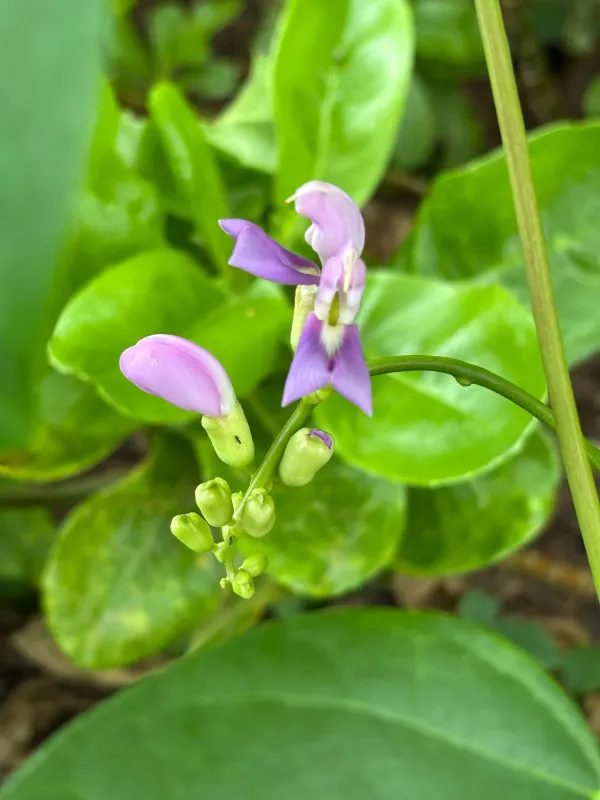
Description
Sowing dates
Canavalia cathartica, commonly known as the sea bean, is a vigorous perennial climbing plant belonging to the Fabaceae family. In tropical regions, sowing occurs at the beginning of the rainy season to ensure sufficient moisture for seedling establishment.
Seeds should be sown at a depth of 3 to 5 centimeters in warm, well-drained soil. Proper soil temperature is critical, as cold conditions significantly delay germination and early growth of the seedlings.
This species is highly competitive, often used as a ground cover to suppress weed growth effectively. When sown for biomass, spacing should be optimized to allow the vines to form a dense canopy quickly.
Uniform seed distribution is recommended to maximize the land coverage. In optimal conditions, the plant establishes itself within a few weeks, showing high seedling vigor.
For research or agricultural purposes, scarifying the hard seed coat can improve germination rates. This ensures that the crop develops uniformly across the field without significant gaps.
Growing requirements
The plant thrives in sandy or loamy soils and exhibits remarkable tolerance to saline conditions. It is particularly well-adapted to coastal environments, making it useful for soil stabilization in such areas.
Full sun exposure is necessary for the plant to achieve its maximum biomass potential. Temperatures ranging from 25 to 32 degrees Celsius are ideal for active development throughout the growing season.
Being a legume, Canavalia cathartica enriches the soil with nitrogen through a symbiotic relationship with rhizobia. This biological nitrogen fixation reduces the need for synthetic fertilizers.
While the plant is quite hardy, it prefers well-drained locations and does not tolerate waterlogging. Excessive moisture in the root zone can lead to physiological stress and root disease.
Although it can spread across the ground, providing physical support allows the plant to produce more pods and seeds. The choice of support depends on the specific agricultural goals of the operation.
Yield
The biomass yield of the sea bean is substantial, making it an excellent candidate for green manure. By incorporating the green parts into the soil, farmers can significantly improve organic matter levels.
Seed yield varies depending on pollinator activity and environmental conditions during the flowering phase. Large, woody pods are produced, containing several protein-rich seeds inside.
The plant is occasionally used as a forage component, though it requires processing to mitigate anti-nutritional factors. It serves as a supplementary feed rather than a primary forage source.
Soil quality improvements from growing this legume are observed in both the physical structure and chemical composition. It acts as a beneficial break crop in various tropical agricultural systems.
Regular monitoring of growth stages ensures that the harvest occurs at the peak of biomass or seed maturation. High yields are consistently achievable when climate and soil conditions remain favorable.
Main diseases and pests
Common pests include aphids and various beetle species that target young, succulent foliage. Integrated pest management strategies are advised to keep populations below economic injury levels.
Fungal diseases like powdery mildew may affect the leaves during periods of high humidity and poor airflow. Managing plant density and ensuring good field ventilation are key preventive measures.
Root rots are potential threats in poorly drained or heavy clay soils. Ensuring site selection emphasizes proper drainage to mitigate these risks effectively.
Seed-feeding insects can cause significant losses in stored seeds. It is essential to dry seeds thoroughly and store them in sealed containers to prevent infestations from spreading.
Biological control agents and resistant practices are prioritized to minimize chemical pesticide reliance. Healthy, vigorous plants generally show a better tolerance to occasional pest attacks.
Harvesting
For green manure, the crop should be harvested or mowed when it reaches the peak of vegetative growth, just before woody stems become too difficult to incorporate into the soil.
Seed harvesting is conducted after the pods have naturally dried and turned brown. The pods are manually collected to prevent shattering and subsequent loss of seeds on the ground.
After collection, the seeds are dried in a well-ventilated area away from direct sunlight. Proper drying prevents mold growth and preserves the longevity of the seed lot for future sowing.
Incorporation into the soil is performed using mechanical implements like disc harrows. This process facilitates the rapid decomposition of organic materials, releasing nutrients for subsequent crops.
Strategic timing of the harvest is essential to balance the production of biomass versus the maturation of seeds. Proper equipment maintenance ensures efficient field operations during the harvest season.