
Pineland tick-trefoil
Desmodium strictum
Description
Growing requirements
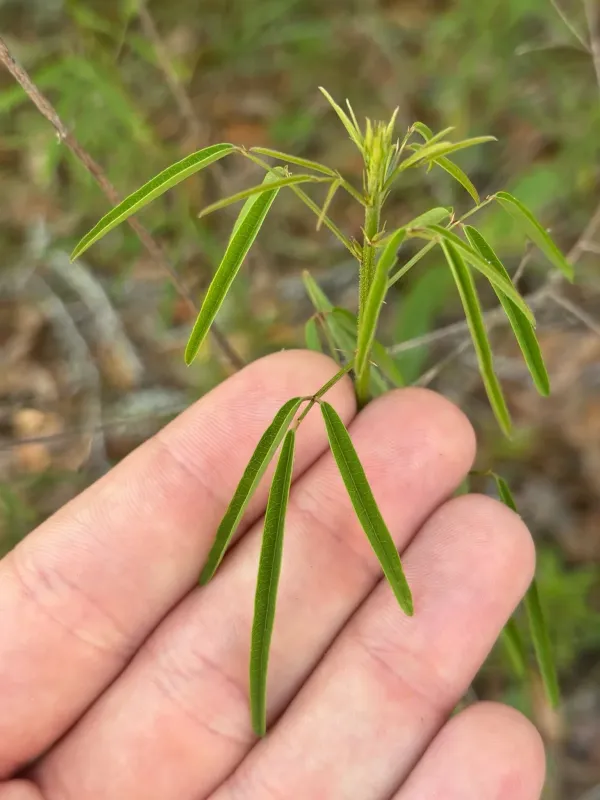
Desmodium strictum, commonly known as Pineland tick-trefoil, is a perennial legume species belonging to the Fabaceae family. It is characterized by its erect, slender stems and distinct pod segments that facilitate seed dispersal through attachment to passing animals.
Native to the southeastern United States, this plant is primarily found in open pine forests and savanna-like ecosystems. It has evolved to survive in habitats with sandy, nutrient-poor soils and is well-adapted to the climatic conditions of temperate to subtropical regions.
The plant demonstrates a strong preference for well-drained, acidic soil types. It requires adequate sunlight to maintain vigorous growth and typically does not perform well in heavily shaded environments, making it an excellent candidate for managed grassland ecosystems.
Botanically, it features pinnately trifoliate leaves and produces small, purple to pinkish flowers in terminal racemes. Its deep root system is highly efficient at water absorption, allowing the plant to remain resilient during temporary summer dry spells.
Agricultural use of Desmodium strictum includes its role as a cover crop and a soil builder. Because it is a legume, it contributes to nitrogen fixation in the soil, which helps improve the overall fertility of the land for subsequent crop cycles.
Main diseases and pests
The plant is susceptible to various fungal pathogens, particularly if the soil remains waterlogged or the humidity is consistently high. Leaf spots and root decay are among the most common issues that need to be addressed through proper drainage management.
Insects like leafhoppers and certain caterpillars can cause significant foliage damage if their populations go uncontrolled. Integrated pest management strategies are advised to maintain the health and productivity of the stands during the peak growing season.