
Anadenanthera colubrina
Anadenanthera colubrina
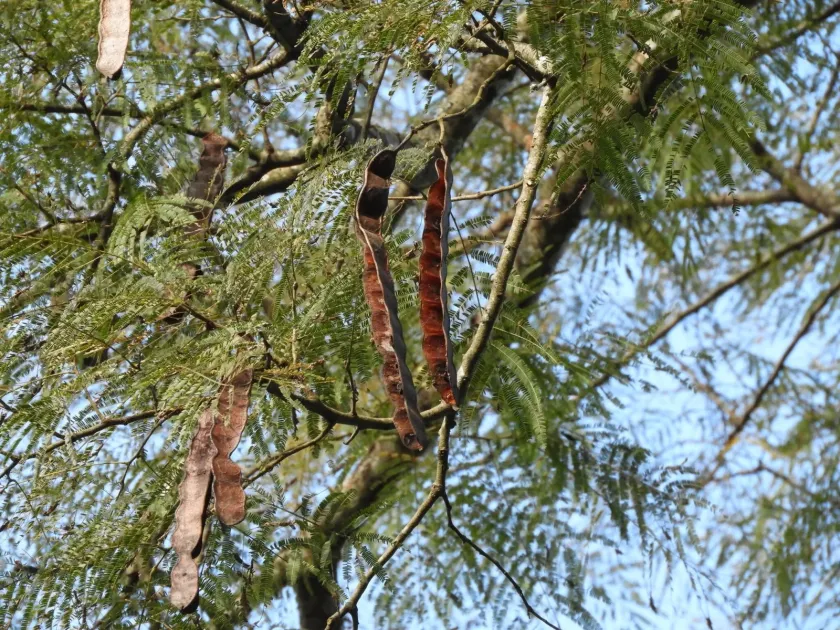
Description
Sowing dates
Anadenanthera colubrina is a fast-growing tropical legume species that is propagated primarily from seeds collected from mature pods.
To ensure high germination rates, seeds require scarification and soaking in water for approximately 24 hours to overcome the physical dormancy caused by their hard seed coat.
In nursery settings, seeds are sown in well-drained, nutrient-rich potting media, maintaining temperatures between 25 and 30 degrees Celsius for optimal growth.
Field planting is ideally conducted at the onset of the rainy season to provide seedlings with adequate moisture to establish their root systems during the early growth phase.
Proper spacing is crucial to prevent competition for light, allowing the trees to develop straight trunks, which is a desirable trait for timber production.
Growing requirements
The tree thrives in hot tropical and subtropical climates, demonstrating high resilience to temperature fluctuations within the 20 to 35-degree range.
Although it exhibits a broad adaptability to various soil types, it performs best on deep, well-drained loamy soils that prevent root saturation during heavy rains.
Anadenanthera colubrina is notably drought-tolerant, capable of surviving through dry seasons that would be detrimental to less adapted tropical plant species.
As a light-demanding species, full sun exposure is required for the canopy to develop properly and for the tree to achieve its maximum growth rate.
This species is valued in agroforestry for its ability to fix nitrogen, which enhances soil fertility and benefits the surrounding vegetation in polyculture systems.
Yield
The primary economic output of this culture is its extremely dense and durable timber, which is highly prized for construction, furniture, and cabinetry.
Mature specimens can reach significant heights, providing substantial volumes of high-quality wood that is resistant to environmental decay and termite attacks.
The yield of timber is maximized through controlled plantation management, with a typical production cycle spanning roughly two decades to reach maturity.
In addition to wood, the bark of Anadenanthera colubrina is a valuable resource, containing tannins used in various artisanal and industrial leather-tanning processes.
Sustainable harvesting methods ensure the continued productivity of the land while maintaining the long-term health and vitality of the plantation site.
Main diseases and pests
Seedlings are particularly vulnerable to fungal pathogens, often triggered by poor ventilation and excessive soil moisture in the initial growth stages.
Various insect pests, including leaf-eating beetles and caterpillars, can significantly impede growth if infestations are not managed early in the season.
Wood-boring insects present a threat to older trees; thus, regular field monitoring is required to detect early signs of infestation and prevent trunk damage.
Herbivorous animals often graze on young shoots, necessitating the use of protective barriers or fencing around new plantations to prevent significant loss.
Implementing integrated pest management strategies, including the use of pheromone traps and biological controls, can effectively reduce the risk of outbreaks.
Harvesting
Harvesting involves the selective felling of trees that meet specific diameter and height requirements, ensuring that only fully mature timber is extracted.
Post-harvest processing includes thorough drying of the lumber to achieve stability and prevent warping, which is vital for high-value manufacturing applications.
When collecting bark for industrial use, care is taken to perform the extraction in a way that minimizes impact on the tree's vascular health and longevity.
Proper site management post-harvest includes the removal of logging debris and preparing the soil for either natural regeneration or replanting cycles.
Harvesting is executed using precise cutting techniques to protect the surrounding standing stock and maintain the overall density of the forest stand.