
Turkmen spurge
Euphorbia turcomanica
Description
Sowing dates
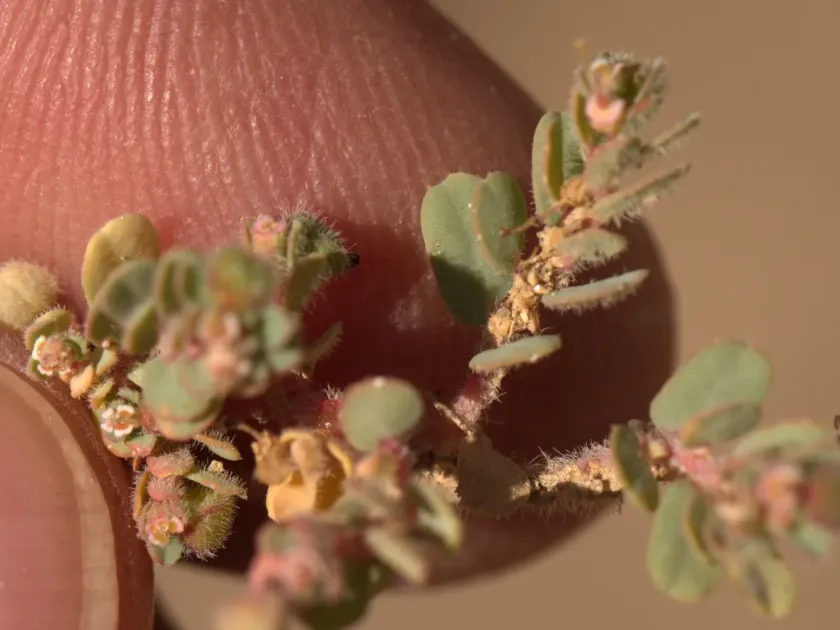
The Turkmen spurge (Euphorbia turcomanica) is a herbaceous plant belonging to the Euphorbiaceae family, native to the arid regions of Central Asia.
In terms of cultivation, seeds should be sown in the autumn, allowing for a natural cold stratification period which is essential for successful germination in spring.
The soil for sowing must be well-prepared and loose, ensuring that the small seeds are not buried too deeply, typically at a depth of no more than 1 to 2 centimeters.
Direct field sowing is the most common method, with spacing requirements that reflect the plant's need to avoid competition for limited soil moisture and light.
Successful establishment of the crop depends largely on the initial moisture level in the spring, though once established, the plant becomes highly drought-tolerant.
Growing requirements
This species is highly adapted to xerophytic conditions, thriving in high temperatures and low rainfall environments characteristic of its natural Turkmen habitat.
It demands well-draining soil, such as sandy or gravelly loam, to prevent the moisture accumulation that leads to root rot and other physiological disorders.
Maximum solar radiation is a requirement for this plant; any shading will negatively impact the plant's growth rate and its secondary metabolite production.
The plant demonstrates a remarkable tolerance to salinity, which makes it a potential candidate for revegetation in degraded arid agricultural lands.
It requires very little human intervention in terms of fertilization, as it is adapted to nutrient-poor soils and may suffer from over-fertilization.
Main diseases and pests
The primary threats to Euphorbia turcomanica are fungal diseases, particularly those that thrive in humid, stagnant air conditions during the growing season.
Pests such as spider mites can cause significant damage to the plant, especially during prolonged heat waves when the plant's metabolic activity is challenged.
Root rot remains the most critical threat to the crop, occurring primarily when the soil drainage capacity is exceeded by excessive irrigation or rainfall.
Effective management strategies include the maintenance of proper plant density to ensure adequate airflow and the implementation of strict weeding schedules.
Biological control methods are preferred to manage pest populations, as the plant's medicinal potential may be compromised by the accumulation of chemical residues.