
Chinese tallow
Triadica sebifera
Description
Sowing dates
Chinese tallow (Triadica sebifera), a member of the Euphorbiaceae family, is a fast-growing deciduous tree that requires specific conditions for successful establishment from seeds.
Sowing is typically performed in spring when soil temperatures reach a consistent range of 15°C to 20°C, ensuring rapid germination and root development.
Commercial plantations are often established using nursery-grown seedlings, as this method ensures uniform growth rates and significantly reduces the time to reach the first harvest.
Row spacing is crucial for commercial setups; planting with 4 to 6-meter intervals allows for optimal canopy development and facilitates access for machinery during maintenance.
Young plants require consistent irrigation during the first year of life to establish a deep root system, which later provides the tree with resilience against moderate drought.
Growing requirements
This species thrives in warm temperate to subtropical climates and is highly regarded for its adaptability to diverse soil conditions, including saline and poor-quality land.
Full solar exposure is a primary requirement for this crop, as shaded conditions significantly limit the tree's ability to produce fatty seeds and maintain a healthy crown.
While the tree is tolerant of various pH levels, it reaches peak productivity when grown in deep, well-drained loamy soils with adequate moisture retention.
Chinese tallow is frost-tolerant once mature, but young trees may require protection in areas where temperatures drop consistently below freezing for extended periods.
Annual rainfall of 1000–1500 mm is generally sufficient for healthy growth, though supplemental irrigation can boost yield during the critical seed-filling phase.
Yield
Productivity increases as the tree matures, with the most robust yields typically observed in specimens older than 10 to 12 years of age.
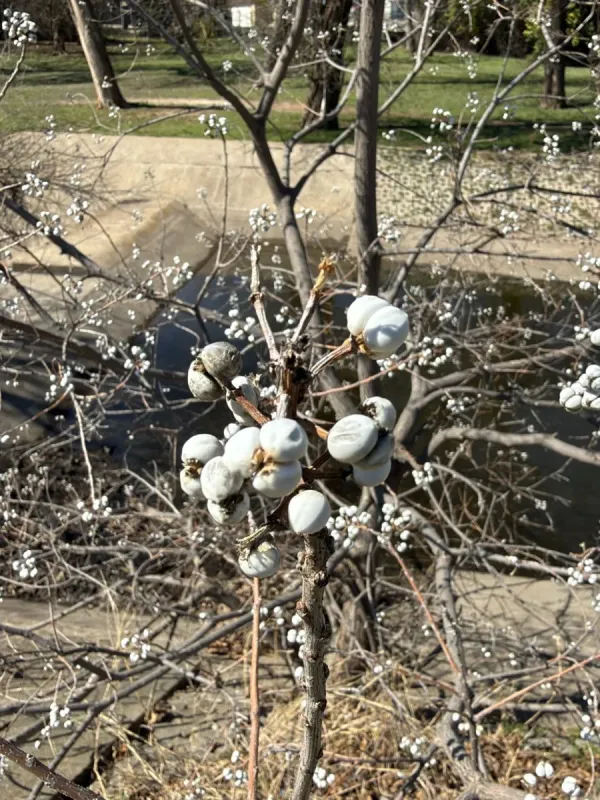
A single mature, well-maintained tree can produce 20–30 kg of seeds annually, with the seeds covered in a distinct white, waxy fat layer.
The crop is increasingly valued for its high potential in biodiesel production, as both the outer waxy coat and the inner seed oil are energy-dense resources.
Systematic pruning is an essential management practice; it increases the density of branches, thereby maximizing the surface area available for fruit production.
Harvesting efficiency depends heavily on the maintenance of the plantation, with managed orchards significantly outperforming wild or semi-wild tree stands.
Main diseases and pests
Triadica sebifera is generally considered a hardy species, but high humidity levels in dense plantations can occasionally lead to leaf-spotting fungal diseases.
Insect pests such as defoliating caterpillars can cause localized damage, requiring monitoring and, in severe cases, the application of targeted biopesticides.
Root rot, specifically caused by waterlogging, is a primary risk in poorly drained sites, which necessitates proper site selection and land preparation before planting.
In certain geographic regions, the tree's vigorous growth makes it a potential invasive species, requiring careful management of seed dispersal and containment.
Adhering to integrated pest management (IPM) practices helps maintain tree health and productivity while minimizing the need for synthetic chemical inputs.
Harvesting
The harvest period occurs in autumn, identified by the browning and splitting of the fruit capsules, which exposes the waxy white seeds to the air.
Timely harvest is essential to prevent significant yield losses due to seed shedding, which occurs rapidly once the capsules have fully opened.
Post-harvest handling involves drying the seeds in well-ventilated areas to remove excess moisture and prevent the development of mold or rancidity.
Mechanical harvesting via tree-shakers is common in modern plantations, as it allows for large volumes of seed to be collected efficiently within short windows of time.
Once dried and cleaned, the raw material can be stored in bulk silos, provided that adequate aeration is maintained to protect the integrity of the vegetable fats.