
Manchineel tree
Hippomane mancinella
Description
Growing requirements
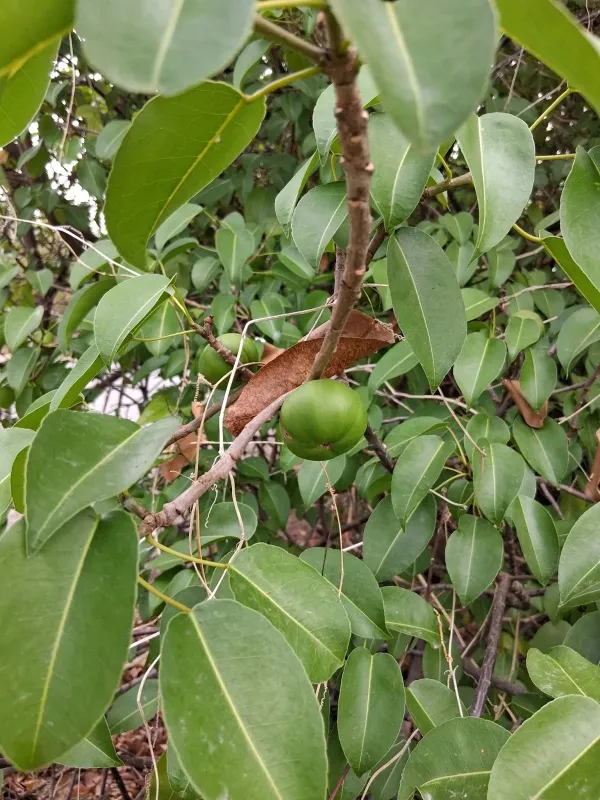
The Manchineel tree (Hippomane mancinella) is a member of the Euphorbiaceae family. It is an evergreen tree reaching up to 15 meters in height, featuring shiny, ovate leaves and inconspicuous greenish-yellow flowers.
Native to tropical regions of the Americas, including the Caribbean and the Gulf of Mexico, it thrives in sandy coastal environments and mangrove forests. It exhibits remarkable tolerance to saline conditions and is a vital component of coastal stabilization.
This species requires a strictly tropical climate with high year-round temperatures. It is completely intolerant to frost, and its growth is dictated by the availability of intense solar radiation characteristic of equatorial and tropical zones.
Soil requirements for the Manchineel tree include sandy or saline substrates typical of coastal dunes. It has adapted to thrive in nutrient-poor soils where other competitive plant species struggle to establish themselves.
There is no commercial cultivation of this species due to the extreme danger posed by its milky sap. The sap contains high concentrations of phorbol and other irritants, causing severe skin blistering and systemic toxicity upon contact.
Main diseases and pests
The plant has few natural enemies due to its high toxicity. However, it can be susceptible to wood-boring insects and certain fungi that have evolved to overcome the defensive chemical compounds present in the plant tissues.