
Guiana cassava
Manihot guyanensis
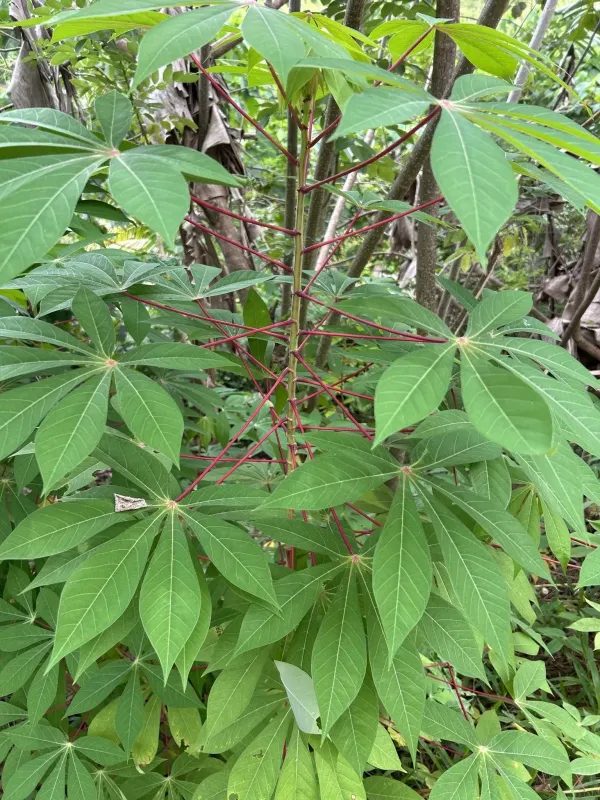
Description
Growing requirements
Guiana cassava (Manihot guyanensis) is a perennial shrub belonging to the Euphorbiaceae family. This species is native to the tropical forests of South America and is distinct from the more common Manihot esculenta in its botanical traits and ecological niche.
The plant thrives in humid tropical climates where temperatures remain consistently high throughout the year. It requires a stable environment with minimal temperature fluctuations to ensure optimal metabolic activity and proper root development.
Soil requirements involve well-drained, fertile substrates that allow for effective water percolation. Acidic soils, typical of the Amazon basin, are often the natural habitat for this species, making it well-adapted to specific regional soil compositions.
Cultivation practices primarily utilize vegetative propagation through stem cuttings. This method ensures that the desirable traits of the parent plant are maintained and allows for rapid establishment in the nursery or direct field planting.
Proper spacing between plants is essential to facilitate adequate airflow and prevent the accumulation of moisture within the canopy. Regular maintenance includes clearing surrounding weeds and monitoring nutrient levels to support vigorous growth.
Main diseases and pests
Root rot diseases remain the most significant threat to this crop. These are typically triggered by poor drainage and excessive soil moisture, which promote the growth of pathogenic fungi that attack the subterranean parts of the plant.
Insect pests such as spider mites and leaf miners can cause extensive damage to the foliage. If left unmanaged, heavy infestations significantly reduce the plant's photosynthetic capacity, leading to stunted growth and lower quality roots.
Viral infections can also pose a serious challenge for farmers. These diseases are often transmitted by sap-sucking insects and lead to systemic issues, such as leaf yellowing, mosaic patterns, and weakened overall plant structure.
Agricultural management strategies involve frequent field scouting and the use of healthy, disease-free cuttings for propagation. Ensuring that tools are sanitized helps reduce the risk of mechanical disease transmission.
Integrated pest management, focusing on biological controls and balanced fertilization, is the recommended approach to minimize reliance on chemical treatments and maintain the ecological balance of the plantation.