
Hairy-fruited spurge
Euphorbia vermiculata
Description
Sowing dates
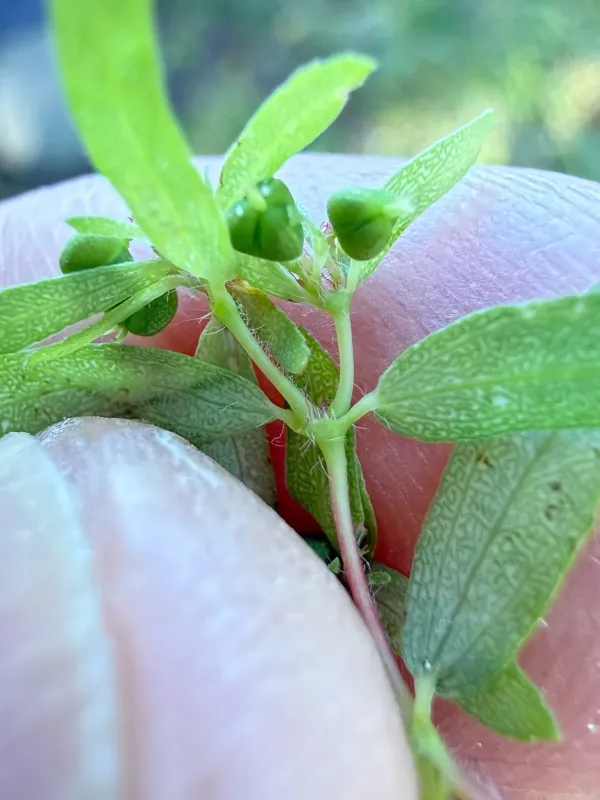
Euphorbia vermiculata, commonly known as hairy-fruited spurge, is an annual plant species often found as a weed in agricultural landscapes. Its life cycle begins with seed germination in early spring, triggered by rising soil temperatures and adequate moisture levels.
The seeds possess long-term viability in the soil profile, which facilitates the persistence of the species in cultivated fields over several growing seasons. Germination often occurs in flushes, making it a persistent challenge for farmers during the planting stage.
Optimal conditions for growth are typically observed in disturbed areas or within the row gaps of broad-leaf crops. The plant establishes a deep taproot quickly, allowing it to compete effectively for water and nutrients with the primary crop.
Sowing practices of main crops should be accompanied by rigorous pre-planting tillage to eliminate early flushes of Euphorbia vermiculata. This approach reduces the initial competitive pressure on the seedlings of agricultural crops.
Farmers should monitor field edges and transition zones, as these often serve as reservoirs for seeds that can be spread into the field by wind, water, or farm machinery during cultivation activities.
Growing requirements
This species thrives in well-drained, sandy to loamy soils that receive moderate to full sunlight. It is highly adaptable to various soil pH levels, enabling it to colonize both fertile croplands and nutrient-poor agricultural margins.
Climate requirements involve temperate conditions with a warm growing season. The plant is drought-tolerant due to its ability to conserve moisture and regulate transpiration, which can be an advantage in arid farming regions.
Regarding cultivation management, the plant's spread is limited by competitive crop shading. Denser canopy closure in crops like wheat or soybean can suppress the development of spurge by limiting the photosynthetic rate of the seedlings.
Integrated weed management programs recommend crop rotation as a primary control tool. By switching between different crop types, farmers can disrupt the specific environmental conditions favored by this spurge species.
Because the plant contains toxic latex, it is not palatable to livestock. Its presence in forage fields must be monitored to ensure hay quality and prevent potential ingestion hazards for cattle or other grazing animals.
Main diseases and pests
The primary biotic threats to Euphorbia vermiculata include fungal pathogens that exploit the plant's moisture-sensitive tissues. Rust and various leaf spot diseases can significantly reduce the vitality of the plant during humid summers.
Pests, particularly certain aphid species, may infest the foliage. While the milky sap acts as a chemical defense, specialized insects can still cause damage, leading to stunted plant development and reduced seed set.
Chemical control involving systemic herbicides is often necessary in high-infestation scenarios. Applications are most successful when targeted at the rosette stage before the plant initiates its reproductive phase and produces seeds.
Mechanical control through inter-row cultivation is highly effective if performed before the plant reaches maturity. This disrupts the root system and prevents the maturation of the characteristic seed-bearing capsules.
Preventative measures, such as cleaning harvesting machinery between fields, are essential to stop the dispersal of seeds. Once established, the species is difficult to eradicate due to its high reproductive potential and resilience.