
Hairy spurge
Euphorbia hirsuta
Description
Growing requirements
Hairy spurge (Euphorbia hirsuta) is a perennial herbaceous plant belonging to the Euphorbiaceae family. It is native to various regions of Europe and Western Asia, typically thriving in habitats with high moisture availability.
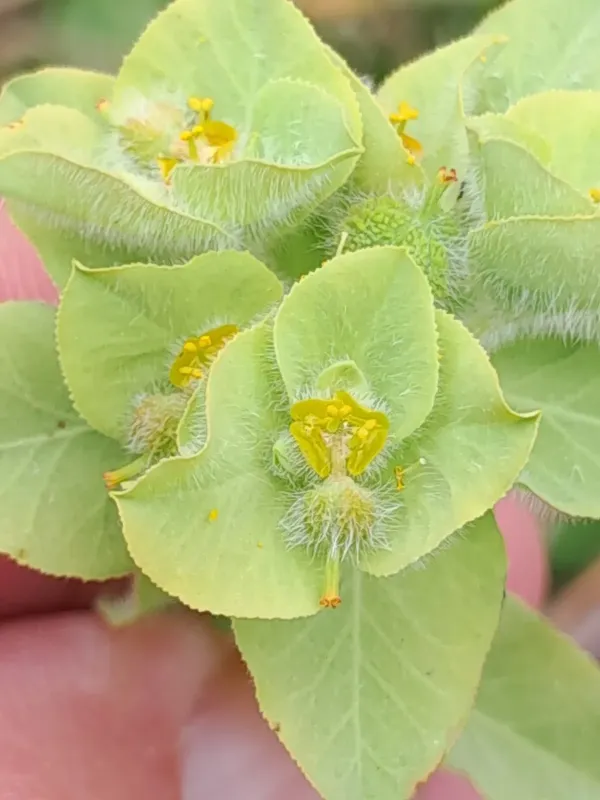
The plant is distinguished by its pubescent (hairy) stems, which serve as its primary diagnostic botanical feature. The root system is quite extensive, allowing the plant to maintain stability in riparian or damp meadow soils.
It requires nutrient-rich, loamy soils that can retain moisture throughout the growing season. While it prefers neutral pH levels, it can adapt to slightly acidic soil environments common in meadow ecosystems.
In terms of agricultural significance, it is often treated as a wild-growing species that may have potential for phytoremediation or erosion control in specialized wetland buffer zones.
The plant is well-adapted to temperate climates, showing significant cold tolerance during winter dormancy, which allows it to persist across multiple growing seasons without specialized protection.
Main diseases and pests
Major diseases affecting this species include rust fungi, which manifest as discoloration on the foliage, and downy mildew, particularly during periods of high humidity and poor air circulation.
Typical pests include aphids, which suck sap from the stems, and leaf miners that cause structural damage to the leaf tissue, reducing the plant's overall photosynthetic capacity.
Integrated Pest Management (IPM) strategies are recommended, focusing on early detection and the use of targeted biological controls to maintain ecological balance.
Proper water management is essential to prevent soil saturation, which can weaken the plant and make it more susceptible to soil-borne pathogens and root rot.
Maintaining a clean field environment and removing potential host plants for pests in the vicinity are crucial steps in managing the health of a spurge population.