
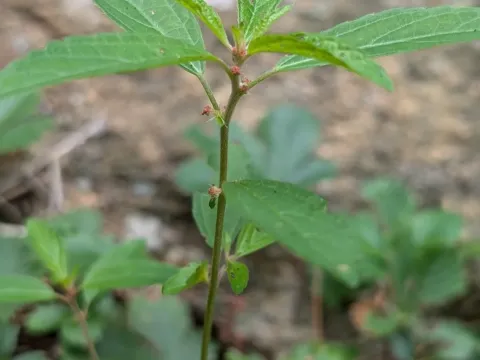
Slender copperleaf
Acalypha gracilens
Slender copperleaf (Acalypha gracilens) is a member of the Euphorbiaceae family. This species is native to North America and is known for its distinct, slender appearance in open fields and woodland edges.
What the section contains
Slender copperleaf
Sowing should ideally occur in early spring, once the danger of frost has passed and the soil has reached a consistently warm temperature suitable for germination.
The seeds require a light, well-draining soil mix to establish roots successfully. Shallow sowing is recommended as the seeds need minimal light for optimal growth.
Indoor propagation is highly effective; seeds can be started in containers and then hardened off before being transplanted into the final growing site.
Adequate spacing is crucial to prevent overcrowding, which can hinder the development of individual plants and lead to poor airflow in the dense foliage.
The plant thrives in full sun but tolerates partial shade, making it a versatile choice for various garden settings across temperate zones.
Soil preferences lean towards sandy or loamy textures that offer superior drainage, as the roots are susceptible to rot if submerged in stagnant water for extended periods.
Consistent moisture is key during the establishment phase, but once mature, the plant displays a moderate tolerance to fluctuations in water availability.
Fertilization with balanced nutrients during the peak growing season supports sustained growth and keeps the foliage looking vibrant throughout the summer months.
Regular maintenance, including weeding around the base of the plant, helps reduce competition for nutrients and ensures the plant receives maximum light exposure.
Spider mites are the most common pest challenge, especially in hot and dry climates, as they thrive on the undersides of the leaves.
Aphids can also congregate on tender stems, which may stunt plant growth if left unmanaged, necessitating immediate attention or natural control methods.
Root rot, driven by poor soil drainage and excess irrigation, is the primary threat to the long-term health and structural integrity of the plant.
Integrated pest management strategies, such as using beneficial insects or mild horticultural soaps, are recommended to maintain plant health without harmful chemicals.
- Frequent monitoring for pest infestations.
- Improving soil drainage if waterlogging is observed.
- Removing infected plant parts to prevent pathogen spread.