
Silver croton
Croton argenteus
Description
Sowing dates
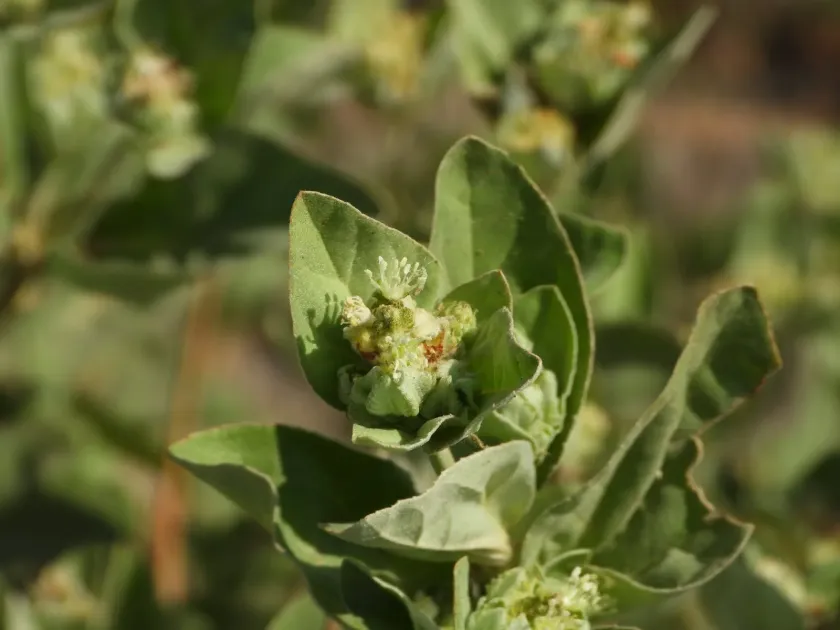
Croton argenteus, commonly known as silver croton, belongs to the diverse Euphorbiaceae family. In its native habitat, reproduction primarily occurs through seeds, which germinate effectively when environmental conditions, such as the onset of the rainy season, are met.
For cultivation purposes, seeds should be sown in well-draining, lightweight soil. The seeds require shallow planting, ideally no deeper than one centimeter, to ensure they receive sufficient light to trigger the germination process successfully.
Temperature management is critical during the initial growth phase, with an ideal range between 22 and 25 degrees Celsius. Maintaining consistent soil moisture without waterlogging is essential to prevent seed rot and ensure strong seedling establishment.
Once seedlings develop their first true leaves, transplanting into individual containers or specific planting sites is recommended to prevent overcrowding. Proper spacing allows for adequate airflow, which is vital for the health of young silver croton plants.
Early-stage growth requires protection from harsh, direct sunlight to allow the root system to develop adequately. Gradual acclimation to stronger light conditions helps the plant harden off and prepare for outdoor growth.
Growing requirements
Silver croton thrives in open, sunny locations. Its characteristic silver pubescence is an evolutionary adaptation that reflects excessive solar radiation, allowing the plant to flourish in intense sunlight without suffering from leaf scorch.
The plant performs best in sandy or loamy soils with excellent drainage. Poorly drained, heavy clay soils are detrimental to the root system and significantly increase the risk of fungal pathogens, which can be fatal to the crop.
Climate requirements include warm, frost-free conditions. In regions prone to cold temperatures, Croton argenteus is typically grown as a seasonal annual or in controlled environments like greenhouses to protect it from thermal stress.
Soil pH should ideally be neutral or slightly acidic. Nutrient management is important, though excessive nitrogen should be avoided to prevent the plant from prioritizing vegetative growth at the expense of its specialized chemical compounds.
Irrigation must be balanced according to local precipitation levels. While the plant exhibits significant drought tolerance, providing supplemental water during prolonged dry spells can maximize vegetative mass and overall crop vigor.
Yield
The economic value of silver croton is derived from its biomass, specifically the leaves, which are prized for their pharmaceutical properties. Yield is optimized through regular pruning, which encourages the development of new, active branches.
Harvesting strategies involve systematic trimming throughout the growing season. By managing the plant's architecture, farmers can achieve multiple harvests, ensuring a continuous supply of material for processing and extraction.
Post-harvest handling is critical to preserving the plant's active constituents. Leaves should be dried in a well-ventilated, shaded environment to prevent the degradation of heat-sensitive and light-sensitive medicinal compounds.
Crop yields are generally highest in plants that are between two and three years old. Proper site maintenance and periodic fertilization help to sustain these yields over several years of productive agricultural exploitation.
Timing the harvest is essential, as the concentration of therapeutic compounds often peaks during specific developmental stages. Harvesting just before natural senescence ensures the highest quality of raw plant material.
Main diseases and pests
Common pests affecting silver croton include spider mites and mealybugs. These organisms often thrive in dry environments; therefore, maintaining appropriate humidity and monitoring the plants regularly are effective preventative measures.
Fungal diseases, such as root rot and powdery mildew, are the primary health risks. These are often linked to excessive soil moisture or poor ventilation, making proper field layout and drainage essential components of disease management.
Using biological control agents is preferred to minimize the chemical footprint on the medicinal crop. Sustainable pest management practices help ensure the safety and purity of the harvested biomass for consumer use.
Weed control is necessary to prevent competition for essential resources like light and water. Keeping the ground around the base of the shrubs clear reduces the risk of pest infestation and promotes overall crop health.
Regular inspection of the foliage is necessary to detect early symptoms of distress. Rapid intervention, including the pruning of affected plant parts, is the most effective way to prevent widespread outbreaks across the plantation.