
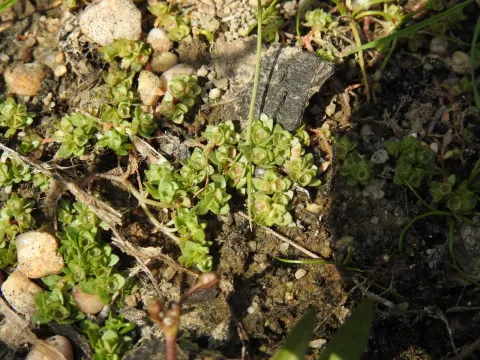
Waterwort
Elatine
Waterwort (Elatine) is a genus of small, annual herbaceous plants belonging to the family Elatinaceae. These plants are true hydrophytes, well-adapted to life in shallow aquatic environments or perpetually saturated soil conditions.
What the section contains
 American waterwort
Elatine americana
American waterwort
Elatine americana
 Brochon's waterwort
Elatine brochonii
Brochon's waterwort
Elatine brochonii
 California waterwort
Elatine californica
California waterwort
Elatine californica
 Eight-stamened waterwort
Elatine hydropiper
Eight-stamened waterwort
Elatine hydropiper
 Elatine alsinastrum
Elatine alsinastrum
Elatine alsinastrum
 Elatine ambigua
Elatine ambigua
Elatine ambigua
 Elatine gratioloides
Elatine macropoda
Elatine macropoda
Elatine gratioloides
Elatine gratioloides
Elatine macropoda
Elatine macropoda
 Elatine spathulata
Elatine spathulata
Elatine spathulata
 Hungarian waterwort
Elatine hungarica
Hungarian waterwort
Elatine hungarica
 Six-stamened waterwort
Elatine hexandra
Six-stamened waterwort
Elatine hexandra
 Small waterwort
Elatine minima
Small waterwort
Elatine minima
 Three-stamen waterwort
Elatine triandra
Three-stamen waterwort
Elatine triandra
Waterwort
The natural range of Elatine is cosmopolitan, spanning across most temperate and subtropical regions of the world. They typically thrive in shallow ponds, riverbanks, muddy margins, and areas that experience seasonal flooding.
Success in growing this culture depends heavily on maintaining consistent water levels and high light intensity. The plants require a stable, moist substrate and are intolerant to desiccation, which can kill a population in a very short timeframe.
Ideal soil for waterwort is silty, muddy, or fine-textured clay that is nutrient-rich yet not overly stagnant. The species prefers neutral to slightly acidic pH levels to ensure proper uptake of microelements from the water column and soil interface.
Cultivation practices involve creating a controlled environment that mimics natural wetlands. This includes ensuring good water clarity and preventing competitive exclusion by taller, more vigorous aquatic macrophytes that might overshadow the small, prostrate growth habit.
The primary threat to waterwort populations is the destruction or alteration of wetland habitats. Draining of ponds, lowering of water tables, and excessive sedimentation can eliminate suitable sites for the plant to germinate and complete its life cycle.
Disease outbreaks are rare in wild populations but can occur in high-density aquatic settings. Fungal rot and bacterial infections are commonly caused by excessive debris accumulation and lack of proper gas exchange within the water body.
Pests such as freshwater snails and various aquatic larvae can graze on the delicate foliage. While minor grazing is natural, large infestations can significantly weaken the plant, making it more susceptible to environmental stressors.
Chemical contamination poses a severe risk to waterwort. High levels of fertilizers, particularly nitrogen and phosphorus runoff from nearby agricultural activities, trigger algal blooms that outcompete waterwort for resources and sunlight.
Mitigation strategies include regular monitoring of water quality parameters and manual weeding of invasive plants. Maintaining an ecological balance is crucial, as any chemical intervention often causes more damage to the delicate waterwort than the pests themselves.