
Three-stamen waterwort
Elatine triandra
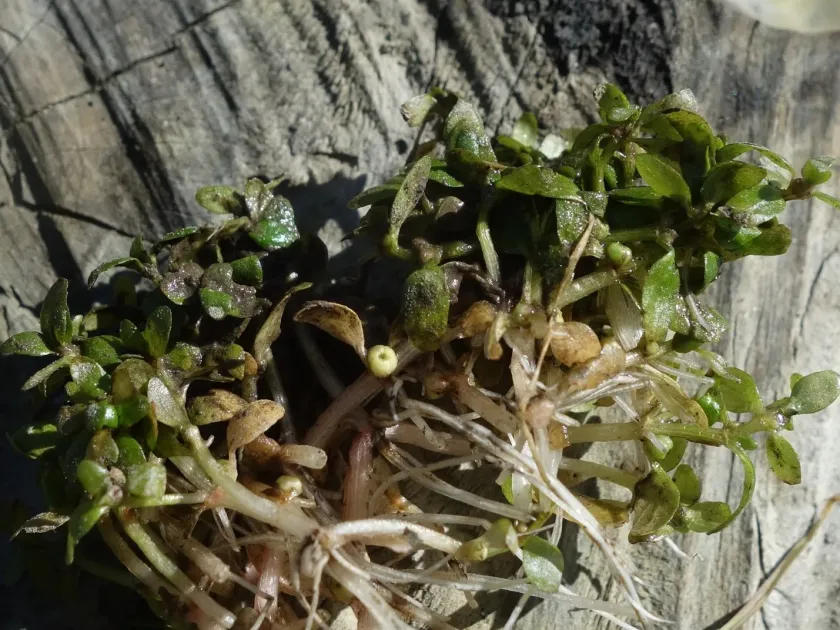
Description
Growing requirements
Three-stamen waterwort (Elatine triandra) is a member of the Elatinaceae family, typically growing as a submerged aquatic or creeping mud-dwelling annual plant.
This species is widely distributed across various temperate regions, often inhabiting the shallow margins of lakes, ponds, and slow-moving rivers or flooded irrigation ditches.
Botanically, it is defined by its small, opposite leaves and trimerous flowers that are adapted for both underwater pollination and terrestrial survival in moist mud.
The species thrives in nutrient-rich silt or sandy substrates, requiring stable moisture levels during the early stages of the growing season to ensure successful establishment.
It acts as an indicator of water quality, preferring clean, shallow freshwater environments where light penetration is sufficient to support the growth of submerged shoots.
Main diseases and pests
Habitat loss due to wetland drainage and the modification of shorelines for industrial or recreational purposes remains the primary threat to Elatine triandra populations.
Eutrophication, often caused by excessive runoff of fertilizers from surrounding agricultural land, leads to algal blooms that shade out this delicate aquatic plant.
Competition with aggressive non-native aquatic vegetation can significantly reduce the available habitat, pushing the species out of its historical ecological niches.
Pollution from herbicides applied in irrigation systems can have toxic effects on the plant, as it is highly sensitive to changes in water chemistry and toxic chemical exposure.
Mechanical disturbances, such as dredging or trampling by livestock, can destabilize the bottom sediment and destroy the seed bank required for the species to recover each season.