
Chinese yam
Dioscorea polystachya Turrcz.
Description
Sowing dates
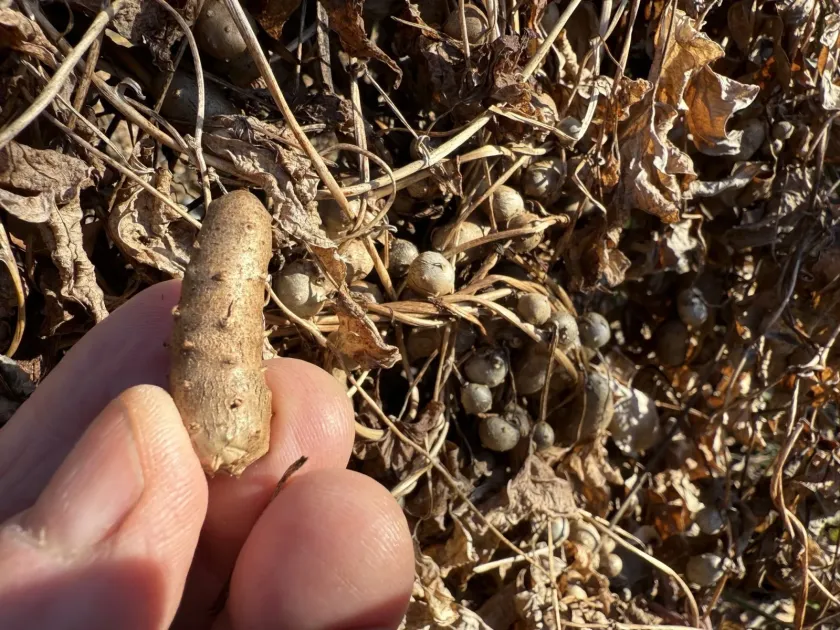
Dioscorea polystachya, commonly known as Chinese yam or cinnamon vine, is a vigorous perennial climbing plant belonging to the Dioscoreaceae family. It is typically propagated vegetatively using segments of the tuber or aerial bulbils that develop in the leaf axils.
Planting usually occurs in early spring once the soil temperature consistently reaches 10 to 12 degrees Celsius. The crop thrives in deep, loose, and well-drained sandy loam soils that have been tilled to a depth of at least 60 to 80 centimeters to accommodate the tuber growth.
Seeds or bulbils are planted at a depth of 8 to 12 centimeters in rows spaced wide enough to allow for trellis installation. If using small bulbils, they are often planted in nurseries for the first year to produce high-quality sets for the following season's commercial planting.
Proper spacing is crucial to ensure each plant receives adequate sunlight and ventilation, which helps prevent foliage diseases. In commercial fields, a density of 30,000 to 40,000 plants per hectare is standard depending on the specific cultivar and trellis layout.
Initial irrigation is necessary to support root establishment. However, constant moisture management is required throughout the growing season to prevent waterlogging, which is detrimental to the developing fleshy tubers.
Growing requirements
This crop is warmth-loving, requiring a long growing season with stable temperatures between 20 and 28 degrees Celsius for optimal biomass production. It is sensitive to extreme cold, and while the tubers can survive underground in dormant states, frost will kill the top growth.
The plant requires full sun to partial shade, with high light intensity significantly boosting the rate of photosynthesis. Shade from trees or structures can delay tuber development and reduce overall quality and starch accumulation.
Vertical support is an essential requirement. As a climbing vine, the plant needs robust trellising to grow upward, which keeps the foliage off the ground, improves air circulation, and makes maintenance and harvesting significantly easier.
Soil pH should remain in the slightly acidic to neutral range (6.0–7.0). The crop is sensitive to soil compaction; therefore, fields must be carefully prepared to eliminate hardpans, as any obstruction will lead to malformed or forked tubers, which have lower market value.
Adequate potassium levels in the soil are vital for tuber maturation and starch storage. Supplemental organic matter improves soil structure, but fresh manure should be avoided to prevent soil-borne pests and uneven growth patterns.
Yield
The yield potential of Chinese yam varies significantly based on soil depth, planting quality, and irrigation management. Under optimal conditions, growers can achieve yields of 15 to 30 tonnes per hectare after a growing period of approximately 150 to 200 days.
Tubers are highly valued for their high content of mucin, starches, and medicinal compounds such as diosgenin. These components make the crop both a staple food source and a valuable raw material for the nutraceutical and pharmaceutical industries.
Varietal selection is a major factor in yield. Modern cultivars are bred specifically for uniform tuber shape, improved disease resistance, and higher starch content, providing better economic returns compared to wild or unselected types.
Proper fertilization scheduling, particularly during the mid-season tuber-filling phase, is critical. Nitrogen should be limited towards the end of the season to prevent excessive vine growth at the expense of root development.
Consistent yield monitoring is recommended to determine the best harvest timing, as the final weeks of the season often see a rapid increase in tuber weight and starch accumulation.
Main diseases and pests
Nematodes represent the most severe threat to Chinese yam production, as they can cause significant damage to the tubers, leading to rotting and reduced shelf life. Crop rotation and the use of certified, disease-free planting material are the primary control strategies.
Fungal diseases like leaf spot and anthracnose are common in high-humidity environments. Improving air circulation through proper trellis design and timely application of fungicides are standard management practices to protect the crop.
Pests such as aphids and spider mites can infest the foliage, particularly during dry, hot weather. Integrated pest management (IPM), including the use of biological controls and selective insecticides, is essential to keep pest populations below the economic injury level.
Viruses often pose a risk for long-term production. Plants showing symptoms of chlorosis, leaf curling, or stunted growth should be rogue-out immediately to prevent the spread of the virus by insect vectors throughout the field.
Bacterial soft rots are a concern during harvest and storage. Ensuring that tubers are not bruised during extraction and that they are cured correctly helps to prevent these opportunistic pathogens from invading the plant tissues.
Harvesting
Harvesting usually begins in autumn when the aerial vines naturally begin to yellow and wither. This indicates that the tubers have stopped expanding and are ready for maturation and dormancy.
Because the tubers can grow extremely deep into the ground, mechanized harvesting requires specialized equipment, such as deep-digging plows, to lift the soil layer without causing damage to the fragile skin of the yam.
Once harvested, tubers should be cleaned of loose soil and cured in a well-ventilated, shaded area. This curing process allows minor surface wounds to heal, which is vital for long-term storage and preventing rot.
For storage, maintain a cool and dry environment with temperatures around 5 to 10 degrees Celsius. High humidity can cause fungal growth, while temperatures below freezing will destroy the tuber tissues due to their high water content.
Properly handled and stored tubers can remain viable and retain their nutritional qualities for several months, allowing for a steady supply to markets throughout the winter and spring periods.