
Leucobryum glaucum
Leucobryum glaucum
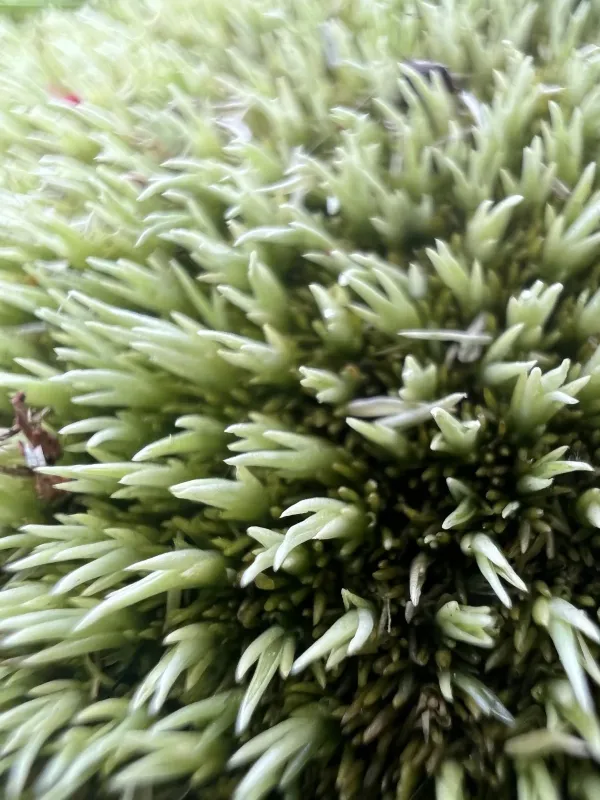
Description
Growing requirements
Leucobryum glaucum, commonly known as pincushion moss, belongs to the Leucobryaceae family. It is a perennial moss that forms distinct, light green, cushion-like mounds.
The plant is native to moist forest ecosystems and requires high atmospheric humidity and shaded locations to thrive. It is typically found in environments with acidic, nutrient-poor substrates.
Soil requirements for cultivation involve a low pH (4.5 to 5.5) and a substrate that can retain moisture without becoming waterlogged, such as a mix of peat and sand.
Climatic conditions should ideally feature cool, humid summers. Direct sunlight must be avoided at all costs, as it quickly dehydrates the plant and turns the cushions brittle.
In landscaping, this species is highly valued for its texture and ability to create "living carpets" in rock gardens, woodland plots, and specialized decorative terrariums.
Main diseases and pests
The primary threat to the health of Leucobryum glaucum is desiccation caused by low humidity levels and prolonged exposure to direct sunlight.
Over-fertilization is detrimental; this species is evolved for oligotrophic environments and cannot process high concentrations of minerals, which promotes harmful algae growth.
Slugs and snails are the most common pests that can graze on the moss mats, creating gaps that compromise the aesthetic appearance of the planting.
Fungal infections occur under conditions of poor ventilation and standing water, leading to the decay of the inner parts of the moss cushions.
Competition from invasive plant species or grasses can rapidly overtake the slow-growing moss colonies, necessitating routine maintenance and manual weeding.