
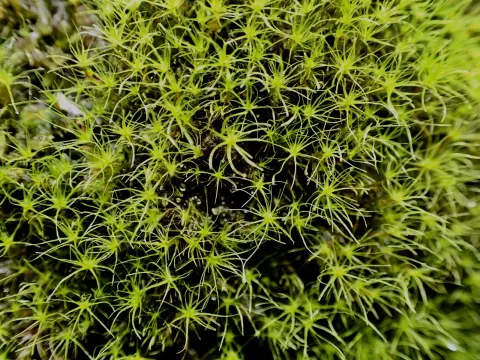
Dicranodontium denudatum
Dicranodontium denudatum
Dicranodontium denudatum is a perennial moss belonging to the Dicranaceae family. While not a commercial agricultural crop, it is an essential constituent of the ground cover in temperate forest ecosystems, contributing to the overall stability of the forest floor.
What the section contains
Dicranodontium denudatum
The species is distributed across the temperate regions of the Northern Hemisphere. It thrives in high-humidity environments, typically inhabiting moist forest soils, decaying logs, and rocky substrates where the microclimate remains cool and damp throughout the season.
Botanically, it is characterized by loose, yellowish-green tufts. The leaves are narrow and lanceolate, often possessing fragile, hair-like tips that easily break off. This mechanism aids in the dispersal of plant fragments, allowing for colonization of adjacent suitable substrates.
The growth requirements are quite specific, demanding consistent moisture levels and protection from direct sunlight. The plant prefers acidic soil conditions and is highly sensitive to atmospheric pollution, making it an excellent indicator of forest health.
Its primary ecological role is soil stabilization and moisture retention. By covering the forest floor, the moss acts as a natural sponge, preventing rapid moisture evaporation and protecting the humus layer from water and wind-induced soil erosion.
The main threats to this species include deforestation and land use changes that disrupt the forest microclimate. When the canopy is opened, the resulting increase in light and decrease in humidity cause rapid dehydration and death of the moss colonies.
The species is not significantly impacted by agricultural pests; however, it is highly vulnerable to air quality degradation. Pollution, particularly sulfur and nitrogen compounds, can severely inhibit growth and lead to the decline of local populations.