
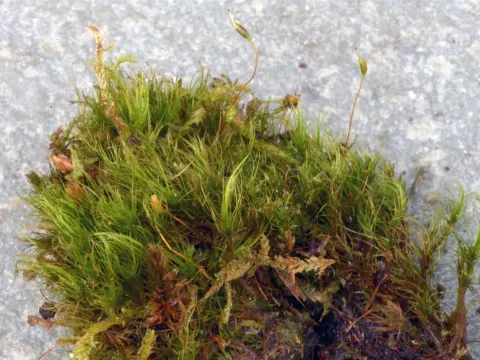
Dicranodontium asperulum
Dicranodontium asperulum
Dicranodontium asperulum is a distinct species of moss belonging to the Dicranaceae family. It is typically characterized by the formation of dense turf mats, which can range in color from yellowish-green to brownish depending on its hydration levels and light exposure.
What the section contains
Dicranodontium asperulum
The plant is native to moist forest habitats, primarily in temperate zones of the Northern Hemisphere. It thrives in environments where air humidity remains consistently high, such as shaded stream banks, moist cliffs, or decaying logs within forest clusters.
Botanically, the species is defined by its narrow, lanceolate leaves featuring a notably rough apex, a morphological trait that assists in water capture and distinguishes it from related taxa within the genus. The plant anchors itself to substrates via rhizoids rather than true root systems.
Growth requirements emphasize the necessity for consistent shade and protection from direct, intense solar radiation. It is an ecologically sensitive plant that demands stable micro-climatic conditions to sustain its metabolic functions and reproductive cycles.
In terms of agricultural utility, it is not cultivated as a crop but is studied for its ecological significance. It serves as an important primary producer in damp woodland ecosystems, contributing significantly to soil moisture retention and preventing micro-level erosion.
The primary threats to the stability of Dicranodontium asperulum populations are linked to habitat fragmentation, large-scale deforestation, and changes in the hydrological cycle of forest tracts.
This moss species is highly sensitive to atmospheric pollution, acting as a natural bio-indicator. Increased concentrations of sulfur dioxide or other industrial pollutants can rapidly inhibit growth and result in the thinning of established moss colonies.
The modification of environmental conditions, such as the removal of forest canopy, creates unfavorable light and moisture stress, which allows invasive vascular plants to outcompete the moss for space and resources.
Pathogenic infections are not considered a major issue for this bryophyte; instead, the physical destruction of its niche is the most significant danger. The recovery of damaged populations is extremely slow due to the specialized nature of its reproductive process.
Conservation strategies should focus on maintaining the integrity of forest ecosystems, preventing soil compaction, and avoiding drainage of swampy or low-lying areas where the species is known to establish its densest stands.