
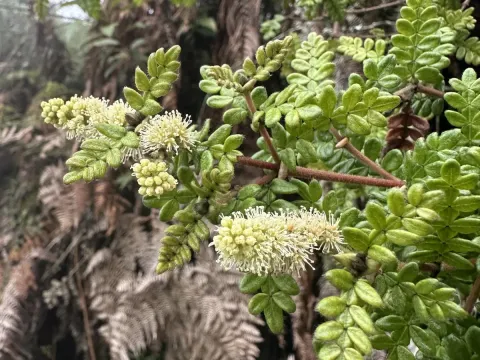
Weinmannia tomentosa
Weinmannia tomentosa
Weinmannia tomentosa is a notable member of the Cunoniaceae family, primarily native to the Andean regions of South America. It is recognized for its dense, hairy foliage, which provides a unique texture in its natural cloud forest habitat.
What the section contains
Weinmannia tomentosa
To thrive, the plant requires a cool, humid environment with consistent moisture levels. It is not adapted to dry climates or regions with extreme heat, making site selection crucial for successful establishment and long-term health.
Soil quality must be high in organic matter and possess excellent drainage capabilities. A slightly acidic soil pH is essential for the tree's health, as alkaline soils often cause nutrient deficiencies in this species.
Cultivation practices involve regular but light irrigation to prevent root saturation. It is important to maintain air circulation around the canopy to minimize the risk of fungal proliferation common in humid environments.
The tree serves several ecological roles, including stabilizing steep terrains and providing shelter for high-altitude biodiversity. While its timber is sometimes harvested locally, conservation efforts are focused on preserving its natural genetic diversity.
Fungal diseases such as powdery mildew and root rot represent the most significant threats to Weinmannia tomentosa. These are largely facilitated by poor ventilation and waterlogged soil conditions.
Common insect pests include scale insects and spider mites, which can thrive if the plant is grown under stressful indoor or sheltered conditions. Vigilant monitoring and early intervention are required to manage these populations.
Environmental stress, particularly sudden drought or excessive direct sunlight, can lead to leaf scorching and premature shedding. Consistent monitoring of microclimatic conditions is necessary to mitigate these risks.
Nutrient deficiencies, specifically chlorosis, are common when soil pH is not maintained at optimal levels. Balanced fertilizing programs focusing on trace minerals are recommended for young plantations.
Competition from invasive plant species can hinder the growth of young saplings in restoration sites. Regular clearance and maintenance of the area are necessary to allow the plant to establish a dominant position in the canopy.