
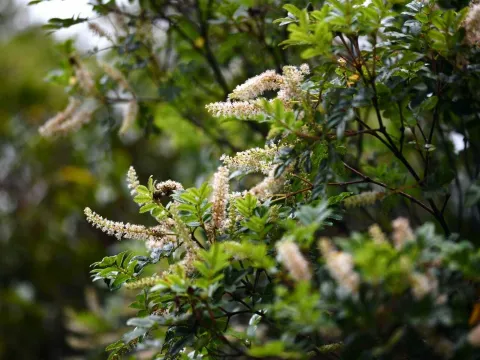
Weinmannia tinctoria
Weinmannia tinctoria
Weinmannia tinctoria is an evergreen tree species belonging to the Cunoniaceae family. Native to the islands of the Indian Ocean, particularly Reunion, this plant has historically served as a significant biological resource for local industries.
What the section contains
Weinmannia tinctoria
The species thrives in humid tropical and subtropical environments. It is typically found in highland forests where high humidity, constant mist, and moderate temperatures provide the necessary conditions for its slow but steady development.
Soil requirements for this plant include well-drained, acidic, and organic-rich substrates. Volcanic soils found in its native range provide the ideal nutrient profile, though the plant is particularly sensitive to waterlogging, necessitating effective drainage.
Botanically, the tree is characterized by its resilient foliage and woody stems, which are adapted to withstand the windy conditions of mountainous terrains. It develops a dense crown over many years, contributing to the structural diversity of its native ecosystems.
Economically, Weinmannia tinctoria has been historically valued for its bark, which is rich in tannins. These compounds were widely utilized in traditional leather tanning and dye production, making the tree a subject of interest for sustainable agroforestry practices.
The main threats to Weinmannia tinctoria populations stem from habitat destruction and the spread of invasive species. These factors significantly impact the regeneration rates of the trees within their primary natural range.
Pests affecting the species include various leaf-eating insects that thrive in humid environments. In dense forest patches, these pests can cause defoliation, which stresses the tree and reduces its ability to synthesize energy through photosynthesis.
Fungal diseases represent a serious threat, especially in conditions of poor air circulation or excessive moisture. Pathogens such as Phytophthora can infect the root system, causing rapid decline and death of the specimen if not managed early.
Preventative agronomy is the primary method of disease control for this species. This involves spacing trees properly to ensure adequate airflow and avoiding the use of contaminated tools that could transmit pathogens between trees.
Conservation efforts are currently focused on monitoring tree health and protecting native forest patches. Integrating traditional knowledge with modern ecological practices is essential to preserve this species for future use in sustainable applications.