
Nuttall's dwarf morning-glory
Evolvulus nuttallianus Roem. & Schult.
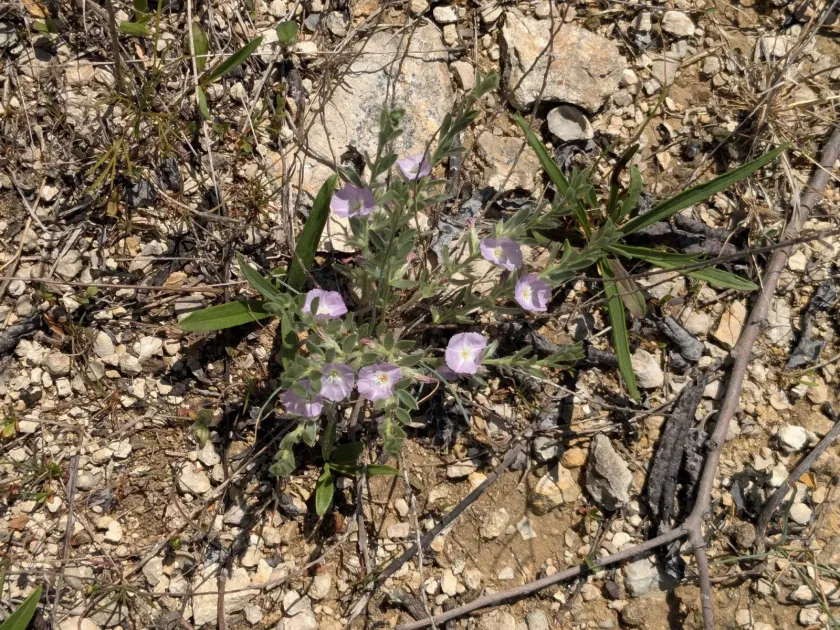
Description
Growing requirements
Evolvulus nuttallianus, commonly known as Nuttall's dwarf morning-glory, is a perennial herb belonging to the Convolvulaceae family. Unlike its vining relatives, this plant exhibits a prostrate, shrub-like habit, making it an excellent ground-cover candidate for arid environments.
Native to the prairies of North America, this species has evolved to thrive in harsh, sunny conditions. Its morphology is adapted to withstand high solar radiation and periodic water shortages, which are defining characteristics of its natural habitat.
To cultivate Evolvulus nuttallianus successfully, one must provide well-draining, sandy, or rocky soil conditions. The plant is highly sensitive to waterlogging, and it is imperative to ensure that the site does not accumulate moisture during dormant or wet seasons.
Climate requirements for this plant focus on high light intensity and thermal stability. It performs optimally in full sun exposure, which promotes the development of its signature silvery foliage and prevents the stems from becoming leggy or weak.
Current agricultural and horticultural applications focus on its use in xeriscaping and ecological restoration projects. Its resilience makes it an ideal candidate for low-maintenance areas where soil improvement is limited or unfeasible.
Main diseases and pests
The most significant threats to Evolvulus nuttallianus are fungal infections induced by excessive moisture and poor air circulation within the plant canopy.
Root rot, specifically caused by soil-borne pathogens like Pythium species, can be lethal if the drainage requirements are not strictly met during cultivation.
Pests such as spider mites or aphids may occasionally appear during prolonged hot and dry spells, particularly if the plant is under physiological stress from other factors.
Preventative measures should focus on site selection that allows for rapid evaporation of dew and rainfall from the leaf surfaces to minimize disease pressure.
Weed management is also critical during the establishment phase, as the slow growth rate of this perennial makes it a poor competitor against aggressive invasive weeds.