
Blue Daze
Evolvulus glomeratus Nees et Mart.
Description
Growing requirements
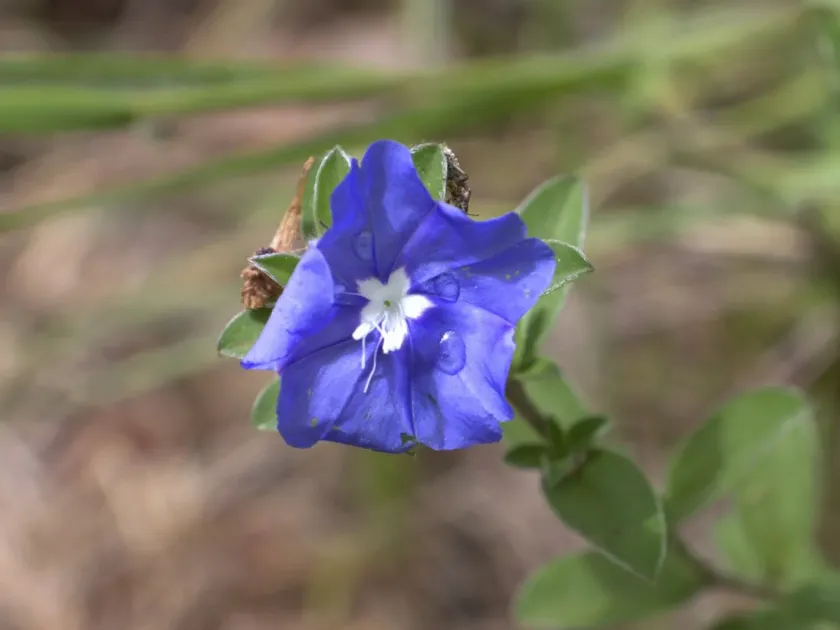
Blue Daze (Evolvulus glomeratus) is a popular herbaceous perennial from the Convolvulaceae family. Unlike many other members of its genus, this plant maintains a prostrate or mounded growth habit, making it an excellent choice for ornamental ground cover.
Native to Brazil and other tropical parts of South America, the plant thrives in warm climates. It is highly valued for its striking, funnel-shaped sky-blue flowers that open in the sun and close at night, providing a continuous display throughout the warm season.
The cultural success of Evolvulus glomeratus depends primarily on full sun exposure. It requires at least six to eight hours of direct sunlight daily to produce a dense canopy of foliage and a profusion of blooms. In partial shade, the stems become leggy and flowering is sparse.
Soil drainage is the most critical requirement for this species. It performs best in sandy or loamy soils that do not hold excessive moisture. When container planting, ensure the use of a high-quality potting mix enriched with perlite to prevent root rot.
While the plant exhibits moderate drought tolerance once established, it prefers consistent moisture to perform optimally. During the height of the summer heat, regular deep watering is necessary to prevent wilting and to keep the foliage vibrant and lush.
Main diseases and pests
Pests such as aphids and spider mites are common enemies of Blue Daze. These pests thrive in dry conditions and can quickly colonize the undersides of leaves, causing yellowing and a decline in plant vigor if left untreated.
Root rot is the most significant disease threat, typically caused by overwatering or poor drainage. Symptoms include wilting despite moist soil, browning of stems, and eventually plant collapse. Early detection and soil management are key to recovery.
To control pest populations, gardeners should inspect their plants regularly and use horticultural soaps or neem oil as a first line of defense. These organic solutions effectively manage infestations without damaging the delicate blooms.
Fungal infections can be minimized by avoiding overhead watering. Keeping the foliage dry helps prevent the development of leaf spot diseases, which can disfigure the plant during prolonged periods of high humidity.
In addition to monitoring health, regular deadheading is recommended to encourage continuous flower production. Removing spent blooms helps the plant redirect its energy into developing new buds rather than setting seeds, ensuring a healthy look throughout the season.