
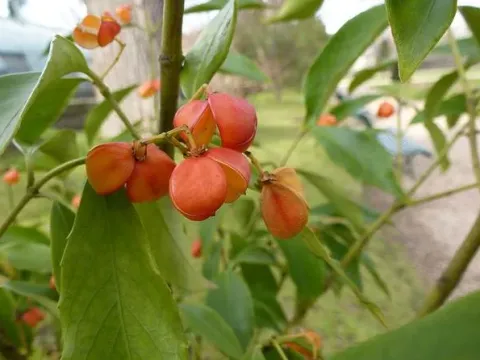
Wilson's spindle
Euonymus wilsonii
Wilson's spindle, botanically known as Euonymus wilsonii, is a member of the Celastraceae family. Native to the mountainous regions of China, this evergreen shrub is prized for its elegant foliage and unique growth structure in garden settings.
What the section contains
Wilson's spindle
The plant requires nutrient-rich, well-drained soil to thrive. It performs best in soils that are slightly acidic or neutral, as poorly drained or waterlogged ground can lead to root system decay and poor plant vigor.
In terms of light, Euonymus wilsonii prefers partial shade or dappled sunlight. Intense, direct sun during the afternoon can scorch the leaves, so positioning the shrub where it receives morning sun followed by afternoon shade is ideal.
Regular watering is essential during the establishment period and throughout dry spells in summer. However, it is vital to balance hydration, as the root system needs to breathe and cannot withstand prolonged submersion in water.
Climate protection is necessary in regions with harsh winters. Applying mulch around the base helps stabilize soil temperature and retain moisture, while wind protection screens can prevent winter burn on the evergreen leaves.
Aphids are common pests that target the soft, new growth of the spindle tree. If left untreated, they can lead to leaf curling and the spread of sooty mold due to the honeydew they excrete during feeding.
Spider mites can become a significant issue in hot, dry environments. They cause stippling on the leaves, which eventually leads to chlorosis and leaf drop if the infestation remains uncontrolled by regular monitoring.
Powdery mildew is a frequent fungal threat characterized by a white, powdery coating on the surface of the leaves. Ensuring adequate air circulation between plants is the primary cultural practice to prevent this fungal development.
Root rot, caused by various soil-borne pathogens, typically occurs in areas with improper drainage or excessive irrigation. It is essential to ensure that the site for the shrub is well-prepared and properly graded.
Integrated pest management strategies, including monitoring and the use of targeted horticultural soaps or fungicides, ensure that Euonymus wilsonii remains healthy and structurally sound in a landscape environment.