
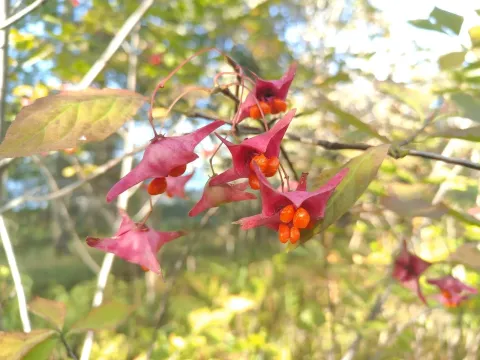
Winged spindle
Euonymus macropterus
The Winged Spindle (Euonymus macropterus) is a deciduous woody shrub or small tree belonging to the Celastraceae family. It is widely recognized for its distinct, winged seed capsules and attractive, dense foliage that changes color dramatically throughout the seasons.
What the section contains
Winged spindle
Native to the Far East, specifically regions of Japan, Korea, and Eastern China, the plant thrives in mixed-forest environments. It is well-adapted to cool-temperate climates, often occupying sheltered valleys where soil moisture levels remain consistent throughout the year.
Successful cultivation requires nutrient-rich, well-draining soil that retains moisture without becoming waterlogged. While the species is quite hardy, it performs best in partial shade, which mimics its natural woodland habitat and protects it from excessive heat stress.
Essential maintenance practices include spring fertilization with organic matter and consistent irrigation during prolonged dry spells. Pruning should be performed during the dormant season to maintain the desired plant structure and remove any crossing or dead branches.
The plant is highly valued for its ornamental versatility in landscaping. It is commonly used as a focal point in borders, as part of shrubbery displays, or in mass plantings for woodland gardens, providing multi-seasonal visual interest through its flowers, unique fruit, and foliage.
Common pests affecting Euonymus macropterus include spider mites and scale insects, which often proliferate in dry, low-humidity conditions. Integrated pest management, including the use of neem oil or horticultural soaps, is recommended for effective control.
Fungal issues, such as powdery mildew, can occur if the plant is overcrowded, limiting airflow. Proper spacing during initial planting and ensuring the canopy remains open through regular thinning are the most effective cultural methods for disease prevention.