
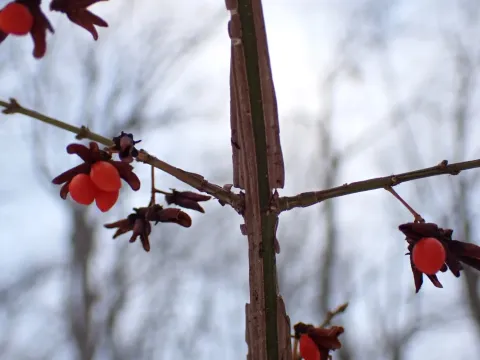
Winged spindle
Euonymus sacrosanctus
Euonymus sacrosanctus, commonly known as the winged spindle, belongs to the Celastraceae family. It is a deciduous shrub prized for its distinct corky wings on the branches and vibrant autumn coloration, which ranges from bright pink to deep scarlet.
What the section contains
Winged spindle
The plant thrives in well-drained, fertile soil with a slightly acidic to neutral pH level. It shows high adaptability to various light conditions, although partial shade is preferred in hotter climates to prevent leaf scorch and maintain leaf moisture balance during summer.
Originating from the Far East, specifically regions of Japan, Korea, and Eastern Russia, this species is highly valued for its cold hardiness. It is often utilized in public landscaping and private gardens as a hardy ornamental plant suitable for temperate climates.
Cultivation requires regular monitoring of soil moisture, as the plant does not tolerate prolonged waterlogging. Mulching the root zone in late autumn helps maintain soil temperature stability and suppresses weed growth during the early spring vegetative phase.
Propagation is typically performed through hardwood cuttings in winter or softwood cuttings during the growing season. Proper spacing is essential to ensure adequate airflow, which prevents the development of fungal infections within the dense shrub structure.
Common pests affecting Euonymus sacrosanctus include spider mites and scale insects. These pests can weaken the plant by sucking sap from the foliage, so early detection and the application of horticultural oils or systemic insecticides are highly recommended.
Fungal diseases, such as powdery mildew, may occur if the planting site lacks proper ventilation. Managing humidity levels and removing infected plant debris are critical steps in maintaining the overall health and vigor of the shrub throughout the year.