
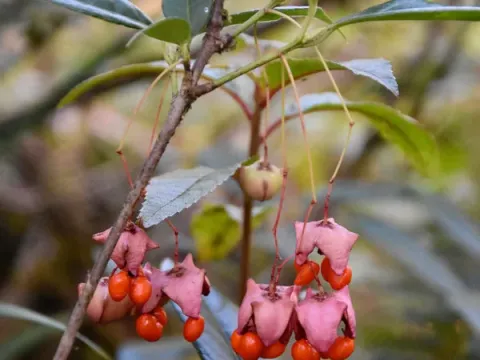
Euonymus frigidus
Euonymus frigidus
Propagation of Euonymus frigidus is commonly performed through seed sowing in late autumn. Since the seeds require a period of natural stratification to break dormancy, sowing them directly into the ground before winter ensures better germination rates in the spring.
What the section contains
Euonymus frigidus
For those preferring spring sowing, a mandatory period of artificial stratification is required. Keeping the seeds in a moist substrate at low positive temperatures for several months is crucial to prepare them for active growth.
Vegetative propagation via green cuttings is a reliable method for multiplying cultivars. Cuttings should be taken during the mid-summer period and placed in a greenhouse with high humidity and moderate shading to facilitate root development.
Transplanting young seedlings into the garden is best done in early spring, just before the buds start to swell. This allows the root system to adapt to the new soil conditions before the heat of summer begins.
Spacing is a vital factor in successful planting. Ensuring at least 1.5 to 2 meters of distance between individual specimens allows for adequate airflow, which is essential to prevent disease spread in the dense foliage of the mature shrub.
Euonymus frigidus belongs to the Celastraceae family and is recognized for its cold tolerance and ornamental appeal. Originating from the mountainous regions of Asia, it thrives in environments that offer moderate moisture and partial shade.
The plant requires well-draining, fertile loamy soils. It does not tolerate waterlogging, as the roots are sensitive to anaerobic conditions. Incorporating compost or well-rotted manure during planting helps improve soil structure and nutrient availability.
In terms of climate, Euonymus frigidus is highly adapted to cooler temperatures. It performs best in regions where it can benefit from distinct seasonal changes, though it should be sheltered from harsh, drying winds that can damage the branches in winter.
Watering is necessary during the growing season, particularly if rainfall is scarce. The goal is to maintain consistently moist soil without creating muddy conditions that promote fungal issues near the root collar.
Pruning is an essential part of the maintenance routine for this species. Removing dead or crossing branches in early spring encourages a vigorous and structurally sound canopy, enhancing the overall health and ornamental value of the plant.
Euonymus frigidus can be susceptible to common pests such as scale insects and spider mites. These pests typically congregate on the undersides of leaves or along succulent stems, sucking the sap and causing stunted growth and yellowing.
Powdery mildew is the most frequent fungal disease, characterized by a dusty white coating on the leaves. It usually occurs when plants are grown in overcrowded conditions with poor air circulation, especially during humid summer months.
Management of these threats involves a combination of cultural practices and chemical intervention. Keeping the garden area clean of debris and pruning out infected growth are the first lines of defense against both pests and fungi.
If pests or diseases become problematic, the use of targeted insecticides or fungicides is advised. Always apply these treatments during calm weather conditions to ensure even coverage and prevent environmental contamination.
- Conducting regular health checks on the foliage throughout the season.
- Using organic mulch to maintain stable root temperature and moisture.
- Ensuring proper thinning of the canopy to allow light and air penetration.