
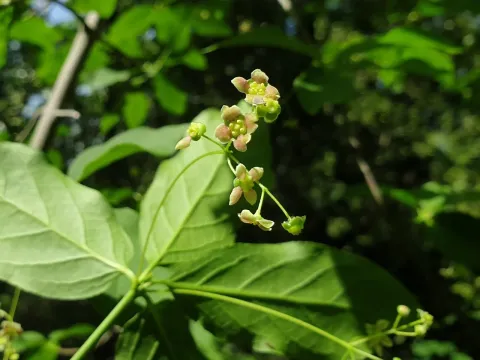
Broad-leaved spindle
Euonymus latifolius
The broad-leaved spindle (Euonymus latifolius) is a deciduous shrub or small tree belonging to the Celastraceae family. It is native to the forests of Central and Southern Europe as well as the Caucasus region.
What the section contains
Broad-leaved spindle
This species prefers rich, loamy, and well-drained soils with a neutral or slightly alkaline pH. While it is highly shade-tolerant, it grows most vigorously in areas with consistent moisture, making it an excellent choice for woodland gardens or shaded park borders.
Botanically, the plant is recognized by its large, elliptic leaves and striking, pendulous pink-red seed capsules that open in the autumn to reveal orange arils. This late-season display makes it a highly prized specimen for ornamental landscaping.
Agrotechnical management involves maintaining soil moisture during dry spells, especially during the first years of establishment. Mulching around the root zone helps to retain humidity and suppress weed growth, which is essential for plant health.
In terms of usage, it is strictly an ornamental plant. Its ability to thrive in shaded environments makes it a vital component for filling gaps in garden beds or as a standalone focal point where other flowering shrubs might fail to grow.
The primary pest affecting this plant is the spindle ermine moth (Yponomeuta cagnagella). Larvae can cause extensive defoliation by spinning large silk webs over branches, requiring immediate treatment with targeted insecticides.
Aphids and spider mites are also common threats that can sap the plant's vitality. Regular inspection of the undersides of leaves is recommended to detect these pests before they develop into heavy infestations.
Powdery mildew represents the most frequent fungal disease, particularly when air circulation is restricted. Pruning practices should focus on thinning out the inner branches to improve airflow through the shrub's center.
Root rot, caused by waterlogged soil conditions, can be fatal to the plant. It is critical to ensure that the planting site offers sufficient drainage to avoid stagnant water around the roots, especially during wet seasons.
Proper sanitation, including the removal and destruction of fallen leaves and infected twigs, is a crucial cultural practice to prevent the overwintering of pathogens and to maintain a healthy growth cycle.