
Southern bush honeysuckle
Diervilla sessilifolia Buckley
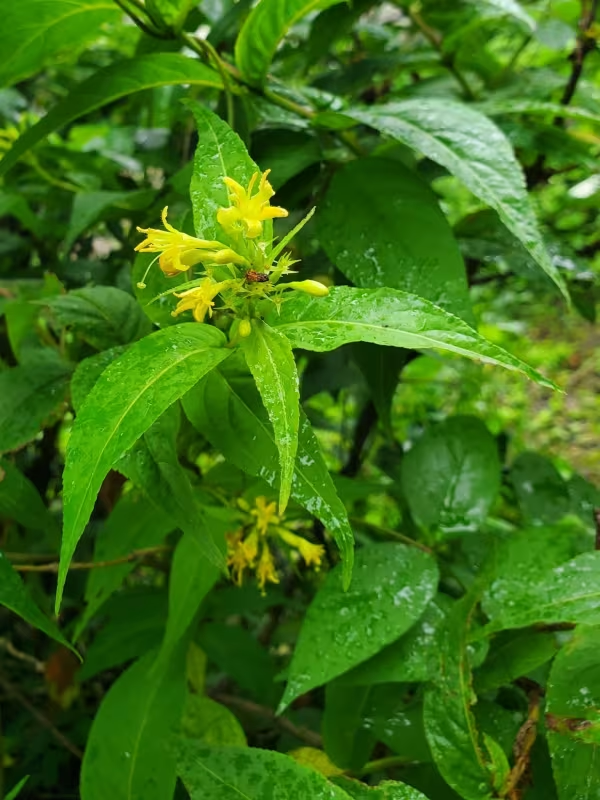
Description
Growing requirements
The Southern bush honeysuckle (Diervilla sessilifolia) is a deciduous shrub belonging to the Caprifoliaceae family. It is native to the southeastern United States, where it thrives in rocky, forested mountain regions.
Cultivation requires well-drained soil rich in organic matter. While it prefers moist environments, it is surprisingly tolerant of dry spells once the root system is established in the landscape.
Sun exposure for this shrub can range from full sun to partial shade. In hotter climates, partial shade is highly recommended to protect the foliage from scorching during the afternoon peak heat.
This species is highly regarded for its hardiness. It adapts well to various pH levels, although it performs best in slightly acidic soils that mimic its natural forest habitat.
Maintenance involves routine watering during the first growing season and occasional fertilization to promote dense vegetative growth if the plant is being used for erosion control.
Main diseases and pests
The Southern bush honeysuckle is generally resistant to many pests, though it may occasionally suffer from aphids during the early spring flush of new growth.
Fungal issues such as powdery mildew can occur if the plant is grown in areas with poor air circulation or excessive humidity levels. Proper spacing is key to prevention.
Root rot is the most serious threat, usually associated with poorly drained, heavy clay soils. Ensuring the site is well-drained is essential to avoiding this condition.
Integrated pest management strategies are recommended, focusing on physical removal of infested leaves before moving to chemical interventions if necessary.
Monitoring the plant's health periodically allows for early detection of environmental stress, which is often the precursor to pest or disease colonization.
Harvesting
The primary use of Diervilla sessilifolia is in landscaping as a mass planting or groundcover. Its ability to spread via rhizomes makes it an excellent choice for stabilizing banks and slopes.
In garden design, it serves as a beautiful accent plant. Its yellow, tubular flowers appearing in mid-summer provide a nectar source for pollinators, including bees and butterflies.
The plant is valued not just for its flowers, but for its foliage, which stays lush throughout the summer and transitions to a bronze or reddish hue during the autumn months.
For best results in a landscape setting, it is advisable to prune the shrub back in early spring. This practice removes dead wood and stimulates new growth, ensuring a fuller and more vigorous plant.
Because it is a low-maintenance shrub, it is frequently chosen for public parks, highway plantings, and ecological restoration projects where minimal intervention is required.