
Mountain bush honeysuckle
Diervilla rivularis Gatt.
Description
Growing requirements
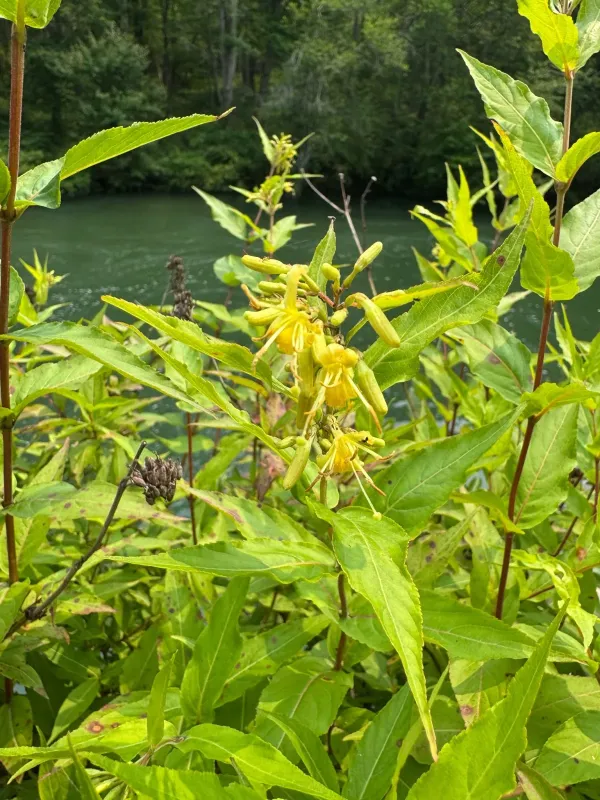
Diervilla rivularis, commonly known as the mountain bush honeysuckle, belongs to the Caprifoliaceae family. Native to the southeastern United States, this species is typically found in moist, rocky woodland habitats.
The plant is a deciduous shrub that is highly valued for its adaptability and hardiness. It thrives in various light conditions, ranging from full sun to partial shade, making it a versatile choice for landscape design.
Regarding soil requirements, Diervilla rivularis prefers rich, well-drained loamy soils. While it can handle some dry spells once established, consistent moisture is vital during the initial growth stages to ensure robust development.
Agricultural management for this species is relatively straightforward. Annual pruning in early spring is recommended to remove dead or weak growth and to encourage a denser, more compact habit of the shrub.
This shrub is widely utilized for erosion control on slopes and banks, as its suckering root system helps stabilize soil. It also serves as an excellent ornamental plant for borders and native garden landscapes.
Main diseases and pests
Diervilla rivularis is known for its sturdy nature and generally lacks significant susceptibility to severe plant diseases, though site conditions play a role.
Poor drainage or waterlogged soils are the primary threats, as they can lead to root rot. Ensuring adequate soil structure is essential for long-term plant health.
In humid environments with low airflow, powdery mildew may occasionally appear on the foliage. Proper spacing between individual plants is the best preventative measure against such issues.
Insect pests, primarily aphids, may infest the terminal buds and new growth during the spring. Monitoring these areas allows for early intervention before damage becomes extensive.
If chemical control becomes necessary, use horticultural soaps or selective insecticides to manage pest populations while preserving beneficial insects in the garden ecosystem.