
Boscia senegalensis
Boscia senegalensis
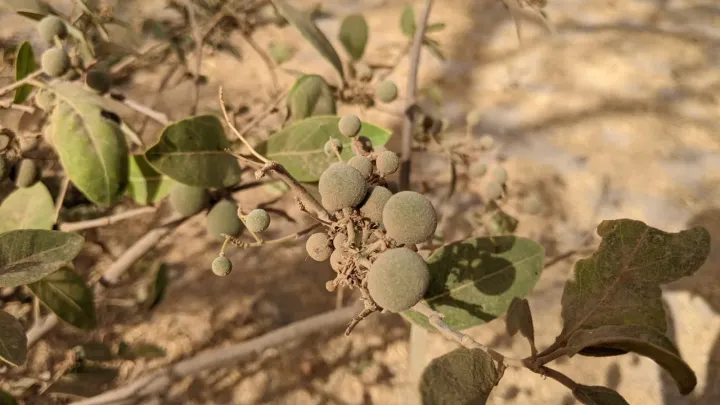
Description
Growing requirements
Boscia senegalensis is a hardy evergreen shrub or small tree belonging to the Capparaceae family. It is indigenous to the arid zones of sub-Saharan Africa, particularly the Sahel region, where it plays a critical role in local ecosystems.
The plant is exceptionally adapted to harsh environmental conditions. It thrives in poor, sandy, and stony soils, demonstrating an ability to withstand extreme temperatures and severe droughts that would be fatal to most conventional agricultural crops.
Regarding climate requirements, it is a xerophytic species that demands full sunlight and can persist with minimal annual rainfall. Its deep root system allows it to access moisture from significant depths, ensuring survival throughout the year.
Agrotechnical management is primarily focused on the protection of juvenile plants. Since the plant grows slowly, initial care is necessary to ensure that young saplings are not damaged by livestock or extreme environmental degradation before they are fully established.
Economic uses of the species are diverse. The fruits and seeds are consumed by local populations, particularly during food shortages, while the leaves serve as a vital source of fodder for goats and camels, sustaining pastoral livelihoods in desert areas.
Main diseases and pests
The primary threat to the species is deforestation for firewood and charcoal production. The slow growth rate of Boscia senegalensis makes it difficult for natural populations to recover after large-scale harvesting by local communities.
Seed-boring insects can significantly damage the reproductive yield of the plant. These pests feed on the developing seeds, which directly reduces the availability of materials for both human consumption and future propagation efforts.
Parasitic infestations, such as mistletoe, represent a recurring problem. These parasites attach to the branches and can weaken the host tree, making it more susceptible to other stressors, including secondary infections and physical damage from heavy winds.
Uncontrolled grazing by domestic livestock poses a severe risk to regeneration. Goats, in particular, browse on the young shoots, which prevents the natural expansion of the plant and limits the survival rate of new individuals within the habitat.
Soil degradation and erosion around the base of the tree are persistent environmental threats. When the soil loses its structure, the root system is exposed, making the tree less stable and significantly reducing its ability to absorb essential nutrients and water.