
Boscia oleoides
Boscia oleoides
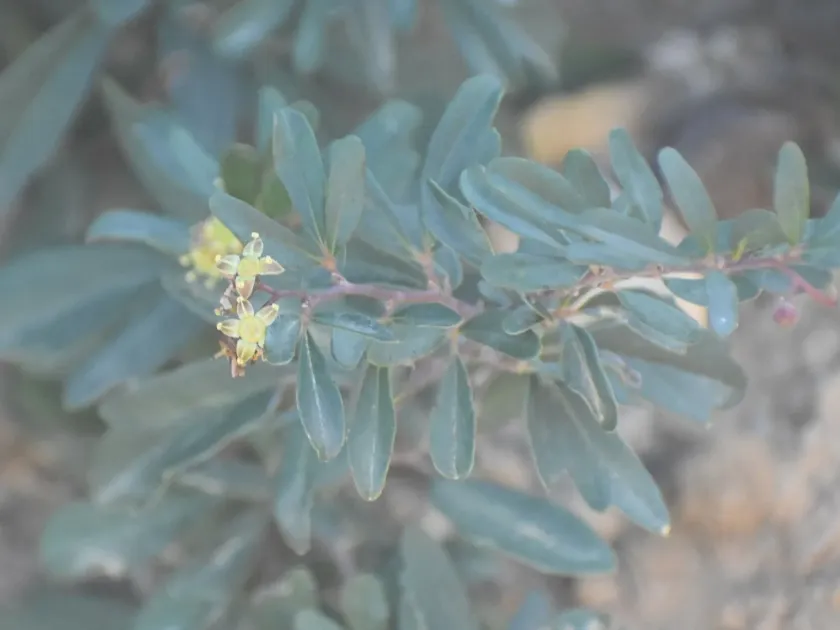
Description
Growing requirements
Boscia oleoides, a member of the Capparaceae family, is a small to medium-sized evergreen tree native to the arid and semi-arid regions of Southern Africa. It is highly valued for its ability to thrive in extremely harsh environments where few other woody species can survive.
The plant demonstrates remarkable drought resistance, supported by a deep taproot system that accesses moisture in deep soil layers. It grows best in well-drained soils, often thriving in rocky or sandy terrain typical of the Karoo and surrounding areas.
Climatic requirements involve high solar radiation and warm temperatures throughout the year. The species is sensitive to prolonged frost, which restricts its range to tropical and subtropical areas where the climate remains stable enough to prevent tissue damage.
Cultivation practices are limited, as the plant is usually harvested from wild populations. However, for conservation and rehabilitation purposes, young plants are protected from herbivores until they are mature enough to withstand browsing pressure.
Its ecological niche includes serving as a habitat and a source of nutrients for various fauna, proving its biological importance as a foundational species in desertified ecosystems.
Harvesting
The primary agricultural use of Boscia oleoides is as a fodder source. The foliage remains green and nutrient-dense during the dry season, making it an essential lifeline for goats, sheep, and game animals when pastures are depleted.
The fruits of the tree are edible and have been historically utilized as food by indigenous populations. They are often processed to extract sweetness or stored for consumption, providing a critical carbohydrate source.
The wood of the species is exceptionally hard and durable. It is traditionally sought after for crafting agricultural tools, walking sticks, and other items that require high resistance to wear and physical stress.
Oil-bearing properties of the seeds offer potential for small-scale industrial applications. While not a global commodity crop, the oil is extracted locally for specific uses, reflecting the species' potential for sustainable exploitation of natural resources.
Harvesting follows traditional sustainable patterns: leaves are browsed by livestock, and fruits are collected by hand. Proper management ensures that the tree continues to produce biomass without suffering from over-exploitation, maintaining the local ecological balance.