
Stinking shepherd's tree
Boscia foetida
Description
Growing requirements
Boscia foetida, commonly known as the stinking shepherd's tree, is a hardy woody plant belonging to the Capparaceae family. It is native to the arid savanna regions of Southern Africa, where it thrives in extreme environmental conditions.
This species is highly adapted to water-stressed environments, showing a remarkable ability to survive on minimal annual rainfall. It typically grows in well-drained, nutrient-poor, stony or sandy soils, functioning as a primary producer in its native habitat.
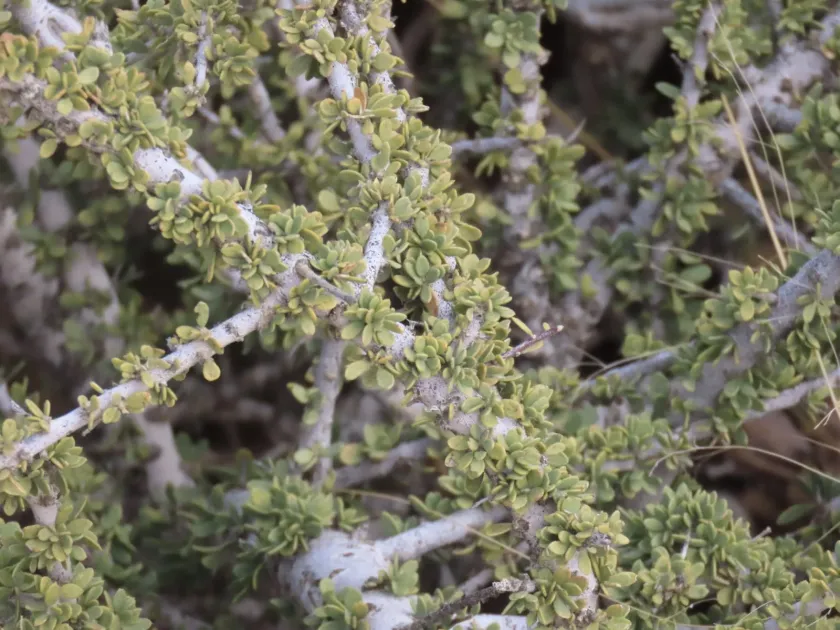
Botanically, it is characterized by its stiff, evergreen leaves and dense, rounded canopy. The common name arises from the pungent, often unpleasant odor emitted by its flowers and leaves, which serves as a unique ecological adaptation to attract specific insects.
When considering agronomic cultivation, Boscia foetida requires full sun exposure and excellent soil drainage. It is a slow-growing species, making it more suitable for reforestation and land restoration rather than intensive agricultural cycles.
Economically, the plant is primarily utilized as a browse plant for livestock and wild game, especially during the dry season when other forage is unavailable. Its hardiness makes it a valuable asset for farmers managing arid landscapes.
Main diseases and pests
The main threats to Boscia foetida are predominantly anthropogenic, specifically over-harvesting for fuelwood and land clearing for large-scale agriculture.
Overgrazing by livestock can significantly impact natural seedling recruitment, as young plants are vulnerable to browsing before they establish a deep root system.
Insect pests, including defoliating beetles and larvae, can occasionally damage the foliage, though the plant's chemical defenses often mitigate major outbreaks.
The plant demonstrates significant resistance to fungal diseases, provided that waterlogging is avoided, as the root system is highly sensitive to excessive soil moisture.
Ecological monitoring suggests that climate change and prolonged droughts may shift the distribution of this species, although it remains one of the most drought-resilient trees in its range.