
Tufted rampion
Physoplexis comosa
Description
Growing requirements
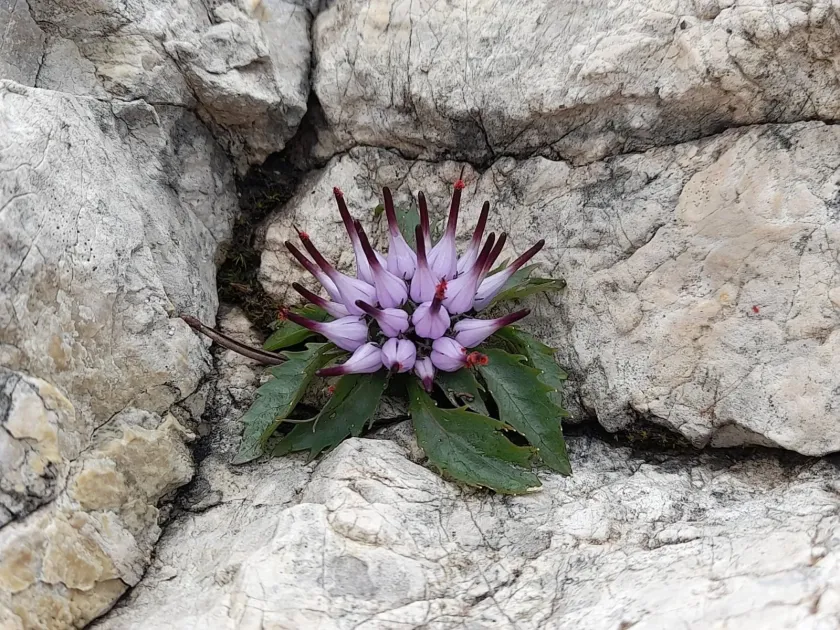
The tufted rampion belongs to the Campanulaceae family and is an iconic inhabitant of the Southern Alps. This alpine plant is highly prized for its unique, dense inflorescences that resemble a cluster of small bells.
Cultivation success depends on replicating its native rock-crevice environment. A substrate consisting of limestone chippings, grit, and minimal organic matter is essential for mimicking its natural growth conditions.
The plant requires a cool, bright location with excellent drainage. In lowland gardens, providing a north-facing rock garden position helps prevent heat stress and maintains the necessary microclimate during summer.
Adequate air circulation is mandatory for this species. Without consistent airflow, the foliage becomes susceptible to physiological stress and potential fungal infections that can quickly spread through the dense mat.
Watering must be performed with precision; the goal is to keep the roots cool and slightly moist without allowing water to stand. Overwatering during the dormant winter phase is the most common cause of crop failure.
Main diseases and pests
Slugs and snails present the most significant threat to the foliage of the tufted rampion. Physical barriers or organic molluscicides are recommended to protect the plant during the active growing season.
Root rot caused by Phytophthora or similar soil-borne pathogens is a common issue when drainage is inadequate. Utilizing sterilized growing media and proper spacing helps minimize these risks.
Aphids can colonize the dense flower spikes, leading to stunted development. Regular monitoring and the application of mild horticultural oils or soaps are recommended for effective management.
Fungal leaf spot diseases may appear during humid, stagnant periods. Improving light exposure and ensuring the plant remains dry on the surface after irrigation helps maintain plant health.
Competition from weeds is a significant threat to the slow-growing tufted rampion. Consistent manual weeding is necessary to prevent the plant from being overgrown and outcompeted in an alpine garden setting.