
Sarcococca hookeriana var. digyna
Sarcococca hookeriana Baill. var. digyna Franch.
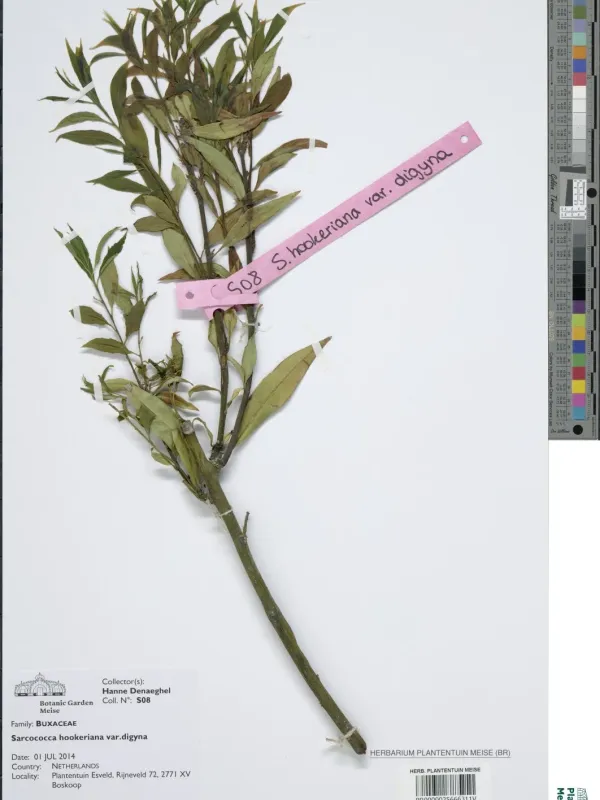
Description
Growing requirements
Sarcococca hookeriana var. digyna is an evergreen shrub belonging to the Buxaceae family. Native to the mountainous regions of China, this plant is highly regarded for its dense, glossy foliage and its fragrant, tiny flowers that bloom during the winter months, providing seasonal interest when most other plants are dormant.
The culture thrives in semi-shaded to fully shaded positions. It is ideally suited for woodland-style gardens where it can be protected from harsh afternoon sunlight. Consistent exposure to direct sun often results in leaf scorch, so selecting a location with dappled light or north-facing shelter is essential for plant vigor.
Regarding soil requirements, the plant prefers fertile, moisture-retentive, yet free-draining soil. It thrives best in slightly acidic to neutral conditions. Incorporating organic matter such as leaf mold or well-rotted compost during planting significantly improves soil structure and ensures the plant receives necessary nutrients.
General maintenance involves keeping the soil consistently moist, especially during dry spells in the growing season. Mulching around the base of the plant helps retain moisture and keeps the roots cool. This shrub is relatively low-maintenance, requiring only minimal pruning to remove damaged stems or to maintain a tidy appearance.
In landscaping, this variety is extensively used for shade borders, evergreen hedging, and as an understory plant beneath larger trees. Its high tolerance for shade and its ability to withstand winter conditions make it a versatile choice for structural planting in temperate gardens across various regions.
Main diseases and pests
The primary threats include root rot diseases caused by poor drainage and waterlogged soil conditions. Proper site selection and careful irrigation management are the most effective preventive measures against these soil-borne pathogens.
Pests like scale insects can occasionally infest the stems, particularly in dry environments. Monitoring the foliage and using horticultural oils or insecticidal soap when necessary helps manage pest populations without damaging the plant's delicate growth.