
Harland boxwood
Buxus harlandii
Description
Growing requirements
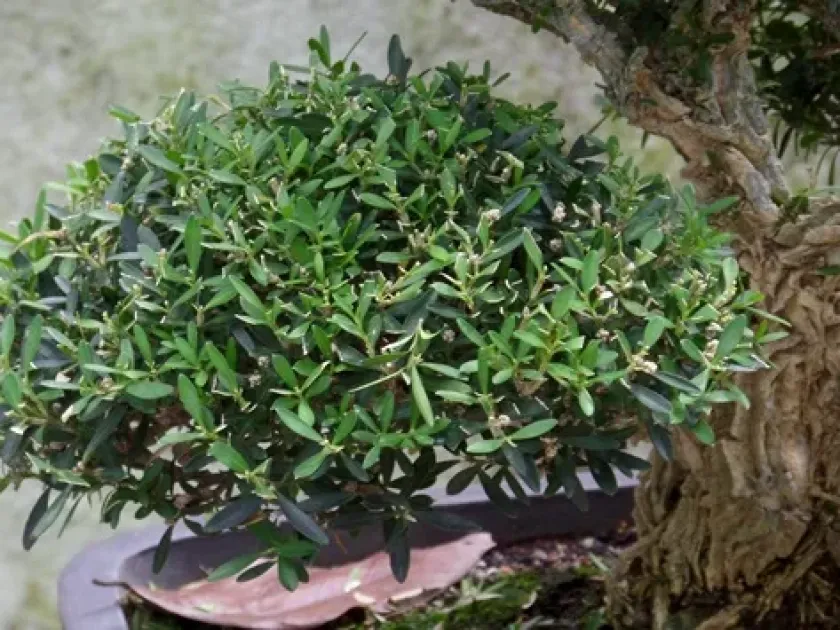
Harland boxwood (Buxus harlandii) is a slow-growing evergreen shrub belonging to the Buxaceae family. It is distinct from other species due to its elongated, lanceolate leaves and irregular, twisting branches, making it a prized specimen for topiary art and traditional bonsai cultivation.
The native habitat of this species is southern China, where it grows in limestone-rich areas. It is adapted to subtropic climates, typically found in shaded rocky crevices, which dictates its preference for moderate light and excellent drainage in a garden setting.
This shrub requires well-draining soil that is neutral or slightly alkaline. It is essential to ensure that the root system is not exposed to stagnant water, which can quickly lead to root rot. If grown in pots, use a high-quality bonsai soil mix to ensure proper aeration.
For climate requirements, Buxus harlandii thrives in filtered light or partial shade. While it can handle some sun, the leaves may burn during intense summer afternoons, so providing a location with morning sun and afternoon shade is optimal for healthy foliage development.
Maintenance is centered on pruning and feeding. Because of its slow growth rate, light trimming is sufficient to maintain the desired shape. Fertilization should be done during the active growth phase, typically in spring, using a balanced fertilizer to support dense branching.
Main diseases and pests
The box tree moth (Cydalima perspectalis) is the most destructive pest for Harland boxwood. Regular monitoring is crucial, as the larvae can defoliate an entire plant in a very short time; biological controls or systemic insecticides are recommended.
Fungal pathogens such as Volutella buxi can cause leaf drop and dieback of branches. These diseases are usually triggered by high humidity and poor airflow. Managing the density of the canopy and ensuring the plant has enough space for air circulation is vital for disease prevention.