
Mountain cabbage
Brassica montana
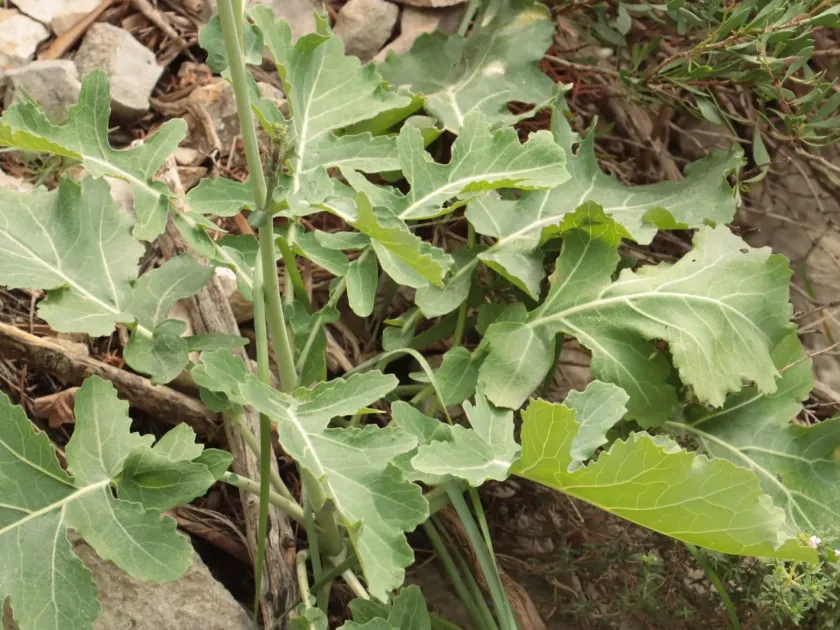
Description
Sowing dates
Sowing seeds of mountain cabbage is typically scheduled for the spring season when the soil warms up to 10–12 degrees Celsius. Mid-April or early May is considered the optimal time for direct sowing into open ground, depending on regional climatic conditions.
To obtain an earlier harvest, it is recommended to use the seedling method, starting in trays in late March. Seedlings are ready for transplanting into the ground 35–45 days after germination, once 4–5 true leaves have formed.
Seeds are sown at a depth of no more than 1–1.5 centimeters, covered with a light substrate to ensure proper oxygen access. It is crucial to maintain stable soil moisture until germination, avoiding the drying out of the top layer of the soil.
The planting scheme should take into account the biological peculiarity of the species to develop a rather sprawling rosette of leaves. The recommended spacing between plants in a row is 40–50 centimeters, while row spacing should be kept at about 60 centimeters to ensure adequate ventilation.
After transplanting seedlings into the soil or thinning out, it is recommended to mulch the soil. This helps retain moisture in the root zone and suppresses weed growth during the early stages of crop development.
Growing requirements
Mountain cabbage (Brassica montana) belongs to the Brassicaceae family and is a perennial species valued for its high adaptability to rocky and poor soils. In the wild, it is found mainly on the limestone slopes of the Mediterranean, which defines its key requirements.
The crop prefers well-drained, slightly alkaline, or neutral soils. It reacts extremely negatively to water stagnation and waterlogging, so when growing on heavy clay soils, it is necessary to provide sand or gravel drainage.
For optimal development, the plant requires an open, well-lit location. Although Brassica montana can withstand short-term drought due to its powerful root system, regular watering during dry periods is mandatory to ensure the production of quality foliage.
The plant demonstrates high resistance to temperature fluctuations, characteristic of mountain species. It can withstand cold snaps, but the optimal temperature for active leaf growth is in the range of 15 to 22 degrees Celsius.
Organic components such as compost or well-rotted manure applied in the autumn are preferred as fertilizers. Excessive nitrogen content can lead to excessive vegetative growth at the expense of taste and disease resistance.
Yield
The yield of mountain cabbage largely depends on the frequency of leaf harvesting and general agronomic practices. Unlike head-forming varieties, this crop is used as a leafy vegetable, so productivity is measured by the mass of accumulated biomass per season.
With proper care, several harvests can be obtained from a single plant during the growing season. Timely removal of outer leaves stimulates the plant to form new rosettes, which significantly extends the life of the planting.
Yield also depends on planting density: with intensive cultivation on fertile soils, the output of green mass per square meter can reach 2.5–3 kilograms per season, provided there is regular watering.
An important factor affecting product yield is the level of light exposure. In shaded conditions, the plant begins to stretch, and yields decrease, while the taste qualities of the leaves deteriorate, becoming less intense.
For commercial purposes, it is recommended to grow the crop on plots with light-textured soil, which simplifies care and allows for the mechanization of the green mass harvesting process without damaging the perennial root system.
Main diseases and pests
Mountain cabbage, as a wild relative of garden crops, has certain genetic resistance, but it remains vulnerable to typical cruciferous pests. The most dangerous are the flea beetle and the cabbage moth.
The flea beetle attacks young seedlings and leaves, eating small holes in them, which can lead to plant death at an early age. The use of non-woven covering materials and regular overhead irrigation is effective in combating them.
Among fungal diseases, clubroot (Plasmodiophora brassicae) poses the greatest threat, especially when soil pH balance is disturbed. Also, in conditions of high humidity and poor ventilation, powdery mildew may develop, requiring immediate treatment with fungicides.
Aphids and caterpillars of the cabbage white butterfly can also cause significant damage to the plantation. Preventive measures include crop rotation and the removal of cruciferous weeds, which often serve as reservoirs for infections and pests.
Biological insecticides and timely monitoring of leaf condition are recommended as protective measures. The use of chemical products must be strictly regulated, especially if regular harvesting is intended.
Harvesting
Harvesting of mountain cabbage begins when the leaf rosette reaches a sufficient size. The uniqueness of this species allows for picking individual leaves as needed without pulling the plant out by the root, allowing it to produce for an extended period.
For daily consumption, it is recommended to pick only the outermost, most developed leaves, leaving the growth point intact. This harvesting method ensures constant replenishment of green mass and maintains the vitality of the plant.
If mass harvesting is necessary, the entire rosette is cut at a level of 5–7 centimeters from the soil surface. Under such conditions, the perennial is capable of regrowing, allowing for multiple harvest cycles until the onset of persistent cold.
The optimal time for harvesting is early morning, when the leaves are most saturated with moisture and have the best taste characteristics. Cut greens should be cooled or processed immediately, as they tend to wilt quickly at room temperature.
The harvested product can be stored in the refrigerator in perforated bags for 3–5 days. For long-term quality preservation, it is recommended to rinse the leaves, dry them, and place them in a container that allows sufficient air circulation.