
Menzies' wallflower
Erysimum menziesii
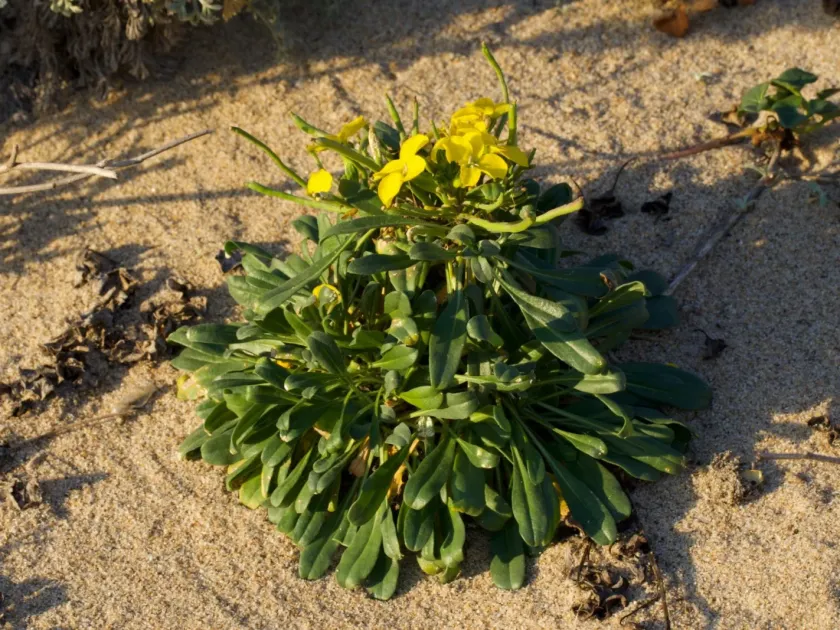
Description
Growing requirements
Menzies' wallflower (Erysimum menziesii) is a rare perennial herbaceous plant belonging to the Brassicaceae family. It is a highly specialized endemic species found primarily in coastal dune ecosystems.
Originating from Northern California, this plant is strictly adapted to loose, sandy soils. These environments are characterized by low nutrient availability and excellent drainage, which are essential for the survival of this species.
The cultural requirements are centered on full sun exposure and minimal competition from other vegetation. It is not an agricultural crop in the traditional sense, as it is a protected species of significant conservation value.
Regarding climate, it thrives in the temperate oceanic conditions of the coast. The plant's physiology is tuned to withstand wind exposure and the specific moisture regimes found on sand dunes.
Morphologically, it features a basal rosette of leaves and striking yellow flowers. Its growth pattern is slow, reflecting its adaptation to the nutrient-poor conditions of its restricted native habitat.
Main diseases and pests
The primary threat to the stability of the population is habitat loss due to coastal development and off-road vehicle damage to dune systems.
Invasive plant species pose a significant risk by altering the microhabitat and outcompeting the wallflower for limited resources within the dunes.
Typical brassica pests, such as flea beetles, can infest the plant, causing damage to the foliage and reducing the photosynthetic capacity of the specimens.
Fungal infections in the root zone can occur if the local moisture balance is disrupted, leading to the decay of the plant's delicate root structure.
Climate change and rising sea levels threaten to diminish the already narrow strip of habitat suitable for this sensitive and endangered botanical species.