
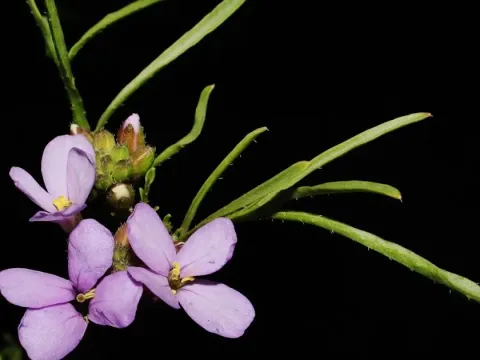
Erucaria
Erucaria
Erucaria is a genus of plants belonging to the Brassicaceae family, well-adapted to specific ecological niches, including arid and semi-arid environments.
What the section contains


Erucaria
The sowing season typically begins in early spring, once soil temperatures consistently exceed 8–10 degrees Celsius to promote uniform germination.
Seeds should be sown at a depth of 2 to 3 centimeters, ensuring they are placed in firm contact with moist soil to guarantee successful seedling emergence.
Seeding rates are adjusted based on soil quality and the intended use of the crop, ensuring sufficient plant population for maximum productivity.
Proper field preparation, including cultivation and weed suppression, is essential before planting to provide the young plants with a competitive advantage.
This crop is highly prized for its drought tolerance, making it an excellent candidate for cultivation in regions where water scarcity is a significant issue.
Erucaria thrives in light, sandy, or loamy soils that offer excellent drainage, which is crucial for preventing root rot and other water-related diseases.
It exhibits a remarkable tolerance for saline soils, allowing it to be utilized for land reclamation projects in areas with high salt concentrations.
Full solar exposure is preferred, as the plant needs sufficient light to drive its photosynthetic processes and maximize biomass production.
Soil pH should ideally be neutral or slightly alkaline, as extreme acidic conditions can hinder the development of the root system and nutrient uptake.
Yield performance of Erucaria depends on seasonal rainfall patterns and the availability of essential nutrients in the soil profile.
When used as a forage crop, it provides substantial amounts of biomass that can be harvested multiple times throughout the growing season.
Seed yields are reliable under favorable climatic conditions, provided the crop is managed properly during the critical phases of flowering and seed set.
Optimizing planting density and nutrient management can significantly increase the total harvestable weight per hectare for commercial producers.
Efficient management practices ensure that the crop reaches its full potential, contributing to the overall agricultural productivity of the farm.
Cruciferous flea beetles are the most significant threat to the crop, particularly during the early stages of plant development when they can decimate stands.
Aphid infestations can occur during warmer periods, leading to stunted growth and damage to the plant tissue if not controlled promptly.
Fungal diseases like downy mildew and alternaria leaf spot may develop if air circulation is poor or if there is excessive moisture in the fields.
- Flea beetles
- Aphids
- Downy mildew
- Alternaria leaf spot
A systematic monitoring program is recommended to identify potential outbreaks and apply necessary control measures before economic damage occurs.
Harvesting for forage should be timed during the late budding or early flowering phase to maximize nutritional value before stems become woody.
For seed production, harvesting must take place when pods turn color and seeds are fully developed to prevent losses from shattering.
Modern harvesting machinery with adjusted settings for small seeds is required to maintain the purity and quality of the harvested produce.
Post-harvest handling is critical, requiring prompt drying of seeds to prevent fungal growth and maintain viability for future planting cycles.
Proper storage in well-ventilated silos is essential to protect the harvest from humidity and pests, ensuring long-term shelf stability.