
Erucaria rostrata
Erucaria rostrata
Description
Growing requirements
Erucaria rostrata is an annual herbaceous plant classified within the Brassicaceae family. It is naturally adapted to arid and semi-arid regions, commonly found across the Middle East, Central Asia, and parts of the Mediterranean basin.
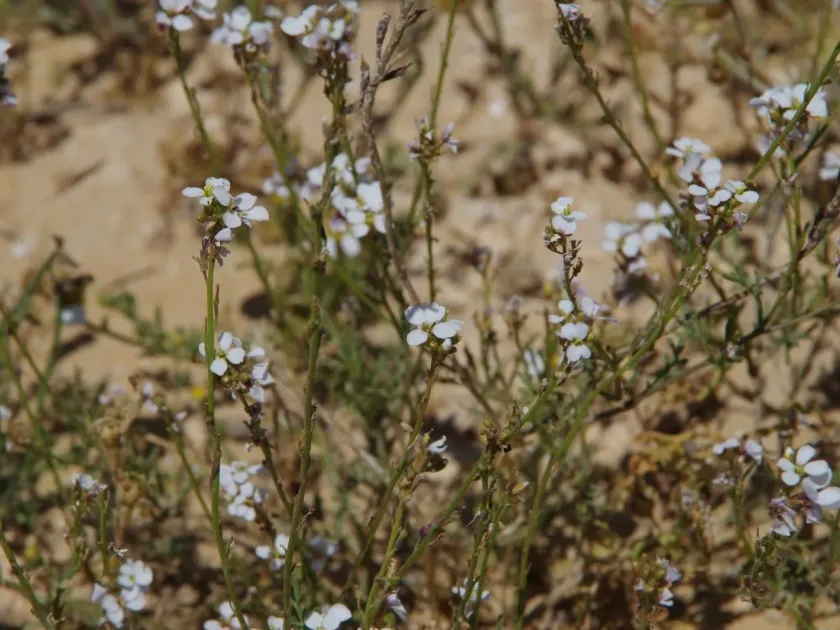
Botanically, the plant features a branched habit with characteristic pinnately lobed leaves. The flowers are typically white to pale pink or lilac, arranged in racemes, which is a hallmark morphological trait of the mustard family.
Regarding soil requirements, Erucaria rostrata prefers light, well-drained soil types with neutral to slightly alkaline pH levels. It exhibits a remarkable tolerance for salinity, allowing it to thrive in environments where other commercial crops might fail.
The plant is highly drought-tolerant, making it a potential candidate for low-input agricultural systems. It requires significant solar radiation for optimal biomass accumulation and progresses rapidly through its life cycle during warmer months.
In addition to its hardiness, the species plays a role in local ecosystems as a source of nectar for pollinators and potentially as a source of seed oil, reflecting the economic value of many related Brassicaceae crops.
Main diseases and pests
The main agronomic challenges for Erucaria rostrata involve typical cruciferous pests, such as flea beetles. These insects are particularly destructive during the early seedling stage, often requiring careful monitoring.
Aphids are another common threat that can infest the inflorescences, causing stunted growth and reducing the overall quality of seed production if not managed through timely intervention.
Fungal pathogens such as downy mildew or various root rots may occur if the crop is exposed to prolonged humidity or poor soil drainage, which disrupts the plant's natural resistance mechanisms.
Integrated pest management strategies are recommended, focusing on crop rotation to avoid the buildup of soil-borne pathogens and insect populations that target members of the Brassicaceae family.
Effective control involves maintaining optimal planting densities to ensure airflow, which helps minimize micro-climates conducive to fungal spread and general plant stress.