
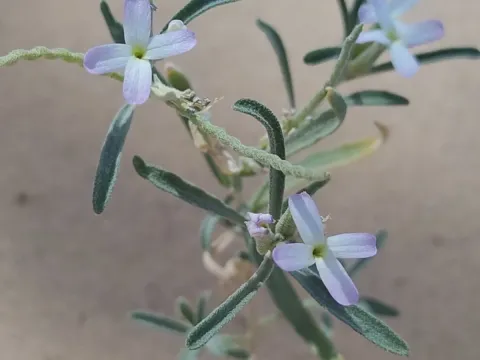
Eremobium
Eremobium
The sowing of Eremobium in its natural habitat usually occurs during the autumn-winter period, which is necessary to allow seeds to undergo natural stratification.
What the section contains

Eremobium
For artificial cultivation, seeds are sown in warm but moist soil in early spring, as soon as the danger of frost, which is fatal for seedlings, has passed.
The seeding depth should be minimal, as the small seeds possess low germination energy when buried deeply, often leading to failure in penetrating the soil crust.
A crucial condition for successful sowing is ensuring firm soil-to-seed contact, which promotes uniform moisture distribution and stimulates metabolic processes within the embryo.
It is recommended to use row-seeding with sufficient spacing between rows to minimize competition for the limited soil moisture available in arid climates.
Eremobium belongs to the Brassicaceae family and is a typical xerophyte, perfectly adapted to the extreme conditions of desert and semi-desert ecological zones.
The crop has extremely low requirements for soil fertility, growing vigorously in sandy, rocky, and saline substrates where other species often fail to survive.
The main limiting factor for optimal development is solar radiation; the plant requires fully open areas without any shading to thrive.
High temperature ranges are essential, as Eremobium actively vegetates during hot periods, efficiently utilizing sparse rainfall to complete its short biological cycle.
The plant exhibits high tolerance to moisture deficits due to an expansive root system capable of reaching deep soil horizons in search of water sources.
Given its adaptation to extreme environments, Eremobium is rarely susceptible to the common pathogens that plague humidity-loving agricultural crops, though risks persist.
The primary threat includes root rot, which occurs during periods of abnormally high soil moisture that inhibit the plant's natural physiological processes.
In terms of pests, various locust species and lepidopteran larvae cause the most damage, capable of destroying young vegetation during the early stages of growth.
Nematodes, which commonly inhabit sandy soils, can also damage the root system, resulting in stunted above-ground biomass and reduced overall crop productivity.
Management strategies include using high-quality seeds and maintaining optimal plant density to ensure adequate ventilation across the field.