
Spanish mustard
Erucaria hispanica
Description
Growing requirements
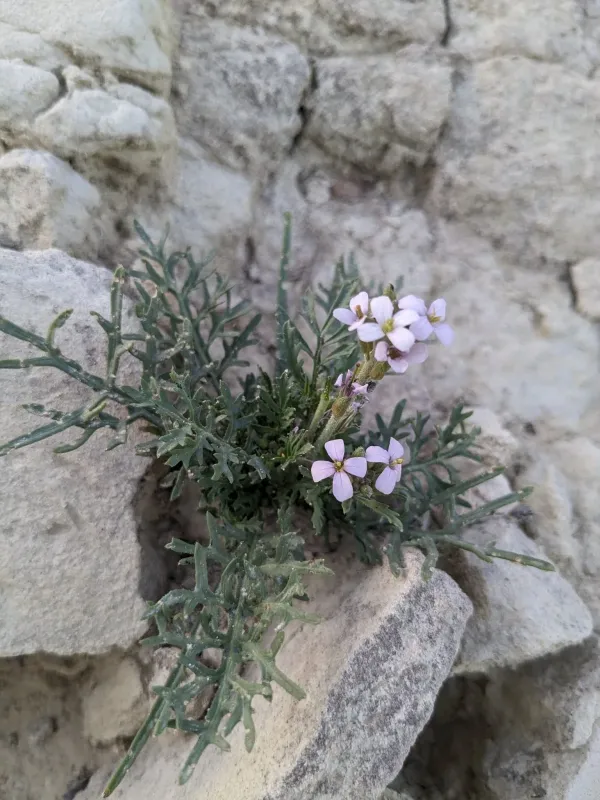
Erucaria hispanica, commonly known as Spanish mustard, is an annual herb belonging to the Brassicaceae family. It is native to the Mediterranean basin, extending into North Africa and Western Asia.
The crop is highly adapted to arid and semi-arid environments. It thrives in well-drained, sandy or gravelly soils where other conventional crops often fail due to lack of nutrients or moisture.
Climate requirements include high solar radiation and resistance to thermal stress. Erucaria hispanica effectively manages water usage through a deep taproot system, allowing it to survive prolonged dry spells.
Agronomic management is minimal. The plant establishes quickly and can outcompete weeds in resource-scarce environments, making it a low-input candidate for dryland farming systems.
Botanically, the plant is characterized by pinnately lobed leaves and distinctive siliques that protect the seeds against harsh weather conditions common in its native range.
Yield
The primary economic interest in Erucaria hispanica lies in its seed oil content. The oil has potential industrial applications, including the production of lubricants and biofuels.
The foliage can serve as a forage source for livestock, particularly in regions where pasture availability is limited by severe seasonal droughts. However, chemical profile monitoring is recommended.
Yield stability is one of the key traits of this species. Even in years with erratic rainfall, the plant demonstrates consistent reproductive performance, which is vital for food security in arid zones.
The harvesting process involves standard mechanical methods. Given the structure of the siliques, the crop can be efficiently harvested once the seeds reach physiological maturity.
Further research into the domestication of Erucaria hispanica could significantly improve its yield potential, turning it into a reliable commercial crop for sustainable agriculture.