
Erucaria pinnata
Erucaria pinnata
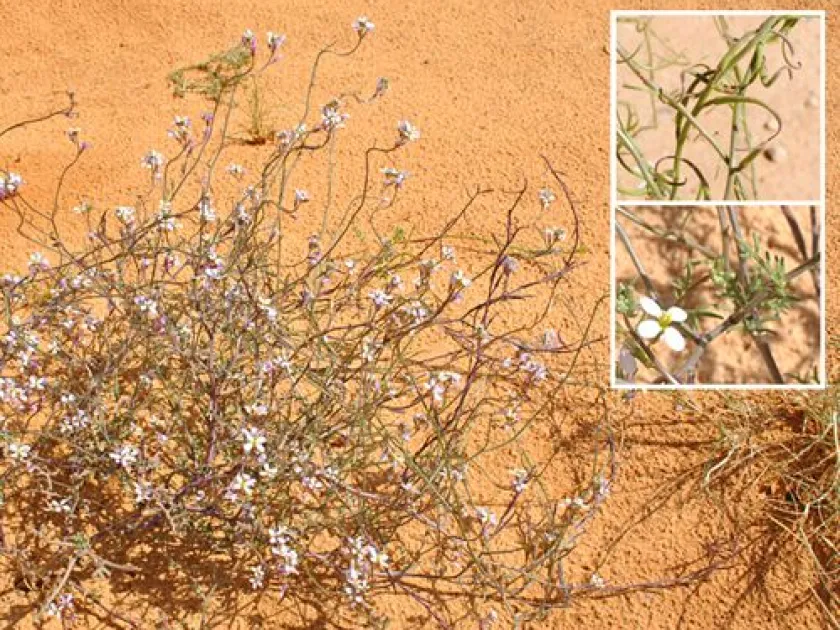
Description
Sowing dates
Erucaria pinnata is a member of the Brassicaceae family. Sowing is typically performed in early spring as soon as the soil temperatures consistently exceed 10 degrees Celsius.
Seeds should be sown at a shallow depth of 1-2 centimeters. This depth allows for optimal emergence while maintaining enough moisture contact for the developing root system.
The plant exhibits a rapid life cycle, making it suitable for regions with short growing seasons or arid climates. Space should be provided for adequate branching.
Row planting with intervals of 25-30 centimeters is recommended to ensure proper airflow and light penetration across the entire crop field.
Proper bed preparation is crucial, as the seeds are relatively small and require a fine, debris-free soil surface to establish themselves effectively.
Growing requirements
The species is native to arid and semi-arid environments, displaying exceptional drought tolerance. It thrives in soils that provide excellent drainage and aeration.
Erucaria pinnata performs best in light, sandy, or rocky soil types. It is highly resilient to the alkaline conditions often found in desert soils.
Sunlight is the most critical environmental requirement. The crop requires full sun exposure throughout the day to achieve its full potential and optimal growth.
Excessive soil moisture is detrimental. The plant is highly prone to root rot if the soil remains saturated for extended periods, especially during cooler nights.
This crop is well-suited for marginal lands where other high-input crops might fail. It remains productive even under nutrient-limited conditions and high heat.
Main diseases and pests
Flea beetles are the primary pests for this crop. They target the foliage of young seedlings, which can significantly reduce the overall stand density.
Aphids can become a problem, particularly during the flowering stage, where they cluster on the buds and can inhibit proper seed formation.
Fungal issues such as downy mildew occur if humidity levels are high or if the canopy is too dense, preventing the necessary evaporation of moisture.
Root-knot diseases are a concern in monoculture. Integrating Erucaria pinnata into a diverse crop rotation system is the most effective preventative measure.
Integrated pest management, focusing on early detection and biological control methods, is recommended over heavy chemical reliance to preserve crop quality.