
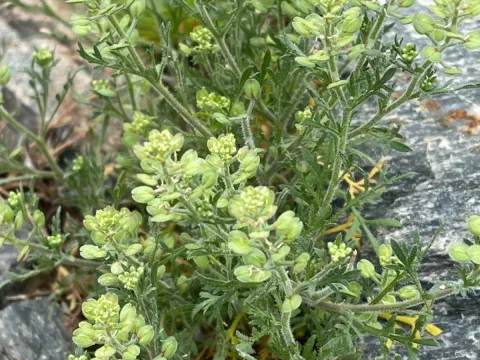
Hoary cress
Cardaria
Hoary cress, scientifically known as Cardaria, belongs to the Brassicaceae family. It is a perennial herbaceous plant that acts as a significant weed in various agricultural cropping systems globally.
What the section contains

Hoary cress
Originating from Southwest Asia, the plant has successfully naturalized in temperate regions worldwide. Its rapid expansion is attributed to its ability to tolerate diverse environmental conditions and its aggressive vegetative spread.
The crop thrives in sunny, open areas and is highly adaptable to various soil types. It is particularly known for its tolerance to saline or nutrient-poor soils where other plants struggle to establish dominance.
Its botanical structure includes a deep, extensive root system capable of vegetative regeneration. Fragments of roots left during soil cultivation can sprout and create new colonies, making the plant very difficult to eradicate.
In terms of climatic requirements, hoary cress prefers moderate temperatures and is well-adapted to regions with seasonal drought. Its resilience allows it to remain active and competitive throughout the growing season.
As a member of the Brassicaceae family, Cardaria serves as a host for various pathogens. It can harbor clubroot and other soil-borne diseases that can potentially infect high-value commercial cruciferous crops.
The plant supports a wide range of insect pests, such as flea beetles. These insects often feed on hoary cress early in the season before moving into surrounding fields of oilseed rape or other crucifers.
Additional threats include potential infestations by aphids and stem weevils. The presence of dense patches of hoary cress significantly increases the pest pressure within the broader farming landscape.
Integrated pest management strategies are crucial for control. These include intensive cultivation during fallow periods, competition with cover crops, and the application of systemic herbicides designed to reach the root system.
Ongoing monitoring is essential to prevent the spread of hoary cress. Eliminating early outbreaks prevents the establishment of deep-rooted colonies that are notoriously difficult to remove from perennial cropping sites.