
Hilarion Cabbage
Brassica hilarionis
Description
Growing requirements
The Hilarion Cabbage (Brassica hilarionis) is a unique herbaceous plant belonging to the Brassicaceae family. Unlike common agricultural varieties, this species is a rare endemic plant native to the island of Cyprus, currently categorized as a vulnerable and endangered species in its natural habitat.
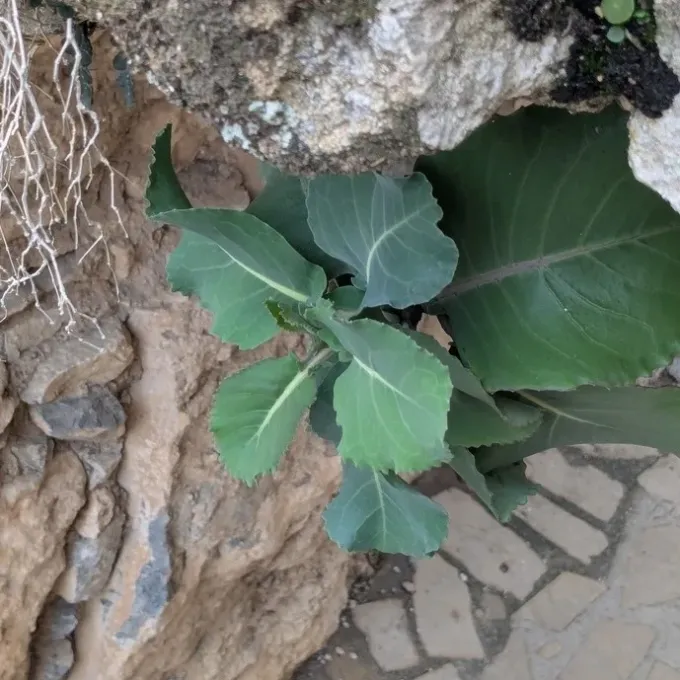
Botanically, the species is a subshrub characterized by a woody stem base. It features grayish-green, fleshy leaves arranged in a basal rosette and develops inflorescences with white or pale yellow petals, which are typical morphological traits for members of the mustard family.
In its natural environment, this species prefers limestone cliffs and stony slopes in mountainous regions, such as the Pentadaktylos range. The plant demonstrates exceptional drought tolerance and has successfully adapted to nutrient-poor, rocky soils that provide excellent drainage and full sun exposure.
Climate requirements include a typical Mediterranean regime, characterized by mild, wet winters and hot, dry summers. The plant is well-adapted to the significant temperature fluctuations common in open mountain ecosystems, although it is highly sensitive to waterlogging and poor root aeration.
The economic value of this species is currently focused on its potential in crop breeding. The genetic makeup of Brassica hilarionis provides a valuable source for developing drought-resistant cultivars of domesticated cabbage that may also possess natural resistance to specific Mediterranean pathogens.
Main diseases and pests
The primary threats to the survival of the species in the wild include the degradation of its natural habitat, overgrazing by livestock, and the pressure from invasive plant species spreading in the region.
When grown in experimental cultivation, the plant can be susceptible to common cruciferous pests, such as the cabbage white butterfly and flea beetles, necessitating close monitoring and precise pest management strategies.