
Hoary mustard
Brassica incana
Description
Growing requirements
Hoary mustard (Brassica incana) is a perennial herbaceous plant belonging to the Brassicaceae family. It serves as a significant wild relative of cultivated cabbage species, possessing unique genetic traits that are highly valued in plant science.
The native range of the species is centered around the Mediterranean, particularly in Italy and surrounding islands. It is typically found in rocky habitats, coastal cliffs, and limestone slopes where it thrives under challenging environmental conditions.
Regarding its requirements, the plant is remarkably well-adapted to arid environments and nutrient-poor soils. It prefers open, sun-drenched locations where its characteristic gray-pubescent leaves minimize water loss through transpiration, allowing it to survive harsh summers.
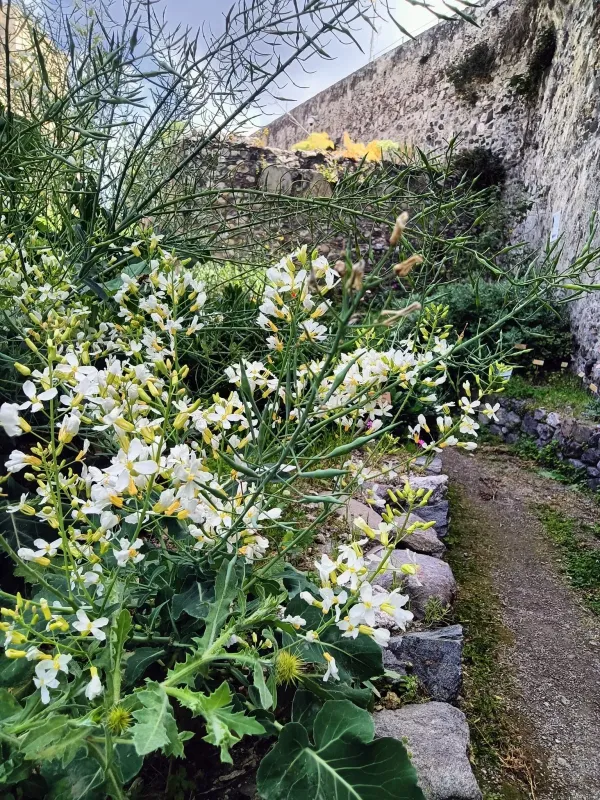
Botanically, Brassica incana is distinguished by its silvery-green appearance and robust root system capable of exploiting thin, rocky substrates. It typically forms a basal rosette, followed by the development of tall, branched inflorescences during the flowering season.
In terms of agricultural use, this species is primarily cultivated as a valuable genetic resource. Researchers utilize it in breeding programs to introduce resistance to abiotic stressors such as drought, salt tolerance, and heat resistance into commercial cabbage hybrids.
Main diseases and pests
The species faces a variety of health challenges common to the Brassica genus, including susceptibility to downy mildew and various bacterial infections. These pathogens can significantly compromise the plant's structural integrity if humidity levels remain high for extended periods.
Insect pests, notably flea beetles, represent a major threat during the seedling stage. These pests create characteristic perforations in the foliage, which can stunt plant growth and reduce overall vigor if not properly managed in controlled environments.
Cabbage moth larvae also pose a risk, as they consume the foliage, potentially leading to total defoliation of smaller plants. Effective management often involves monitoring for early signs of infestation and ensuring the maintenance of beneficial insect populations.
Soil-borne diseases such as root rot can occur if the growing medium lacks adequate drainage. Given the plant's preference for well-drained rocky sites, any saturation of the root zone must be avoided to prevent fungal proliferation.
In conservation and experimental breeding contexts, maintaining plant health involves integrated pest management strategies. Prioritizing biological control and proper spacing helps maintain the health of these wild specimens without the need for intensive chemical applications.