
Reference · Crops
Hoary alyssum
Berteroa
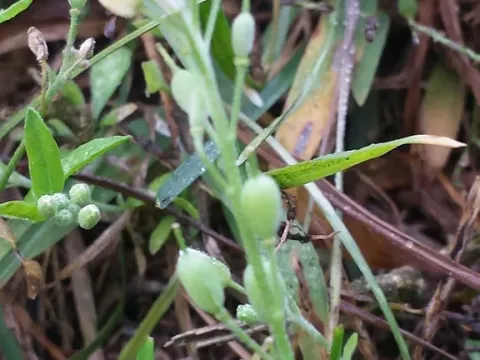
Hoary alyssum is typically a biennial or short-lived perennial herb that reproduces exclusively through seeds. The plant’s high reproductive capacity allows it to establish quickly in open areas, roadsides, and agricultural fields that lack dense vegetation cover.
1
items
What the section contains

Marketplace
Products in this section · 1
Hoary alyssum
Seeds are capable of germinating during both the autumn and spring periods. Seedlings that emerge in late summer often form a hardy basal rosette that survives the winter, allowing for rapid vertical growth and early flowering in the following spring season.
The optimal germination depth for seeds is shallow, generally between 0.5 and 2 centimeters. This makes the species highly dependent on surface-level soil conditions and light for successful initial establishment, a factor often leveraged in field management.
The flowering phase is notably extended, lasting from early June through late August. During this period, the plant produces numerous racemes that yield a massive amount of small, wind-dispersed seeds, contributing to its rapid spread across diverse environments.
Given that a single mature plant can produce upwards of 15,000 seeds, field management must focus on preventing seed set. Mechanical intervention prior to the mid-flowering stage is essential to deplete the soil seed bank effectively over successive seasons.
As a member of the Brassicaceae family, Berteroa incana shows remarkable ecological flexibility. It is frequently found on dry, coarse-textured, and low-fertility soils where other plant species struggle to compete for moisture or essential mineral nutrients.
The plant is highly heliophilic, thriving in full sun environments. While it prefers open, sunny conditions, its ability to tolerate varying moisture levels—from drought-prone sandy soils to average loamy substrates—makes it an invasive threat in many regions.
Hoary alyssum does not require specialized soil preparation to thrive. Its deep taproot system provides a significant advantage in water-scarce conditions, allowing it to extract moisture from deeper soil layers that are inaccessible to many shallow-rooted crops.
Cold tolerance is a distinct feature of this species, allowing it to survive harsh winters in temperate climates. This resilience makes it a persistent weed in pasture lands and forage fields where it can outcompete desirable forage grasses.
The plant exhibits adaptability to a wide range of soil pH levels. While it shows a slight preference for neutral or slightly alkaline substrates, it colonizes acidic soils with ease, often appearing as a pioneer species on degraded or disturbed land.
Hoary alyssum is not traditionally cultivated as a commodity crop, but it serves as a noteworthy honey plant. Its extensive flowering period provides a consistent nectar source for pollinators, significantly benefiting local apiculture during the summer months.
Honey yields from pure stands can be substantial, depending on environmental factors and pollinator density. Beekeepers often consider the presence of this plant a strategic advantage for building colony strength before the autumn period.
In certain contexts, the aerial parts of the plant are investigated for secondary metabolites. Though not currently processed on an industrial scale, the chemical profile of Berteroa incana is of interest for potential applications in botanical research and pharmacology.
The plant is generally avoided by livestock due to its high concentration of specific glucosinolates. When ingested in high quantities, particularly in contaminated hay, it can cause toxicity issues, including fever and limb edema in horses.
In agricultural production, the “yield” associated with hoary alyssum is typically measured in terms of negative impact on field productivity. Efficient control measures ensure that the presence of this weed does not detract from the overall output of forage or cereal crops.
This species is a significant reservoir for pathogens common to the cabbage family. It can harbor clubroot, downy mildew, and various viruses, posing a threat to neighboring commercial brassica crops like canola, mustard, and kale.
Insect pests that frequently colonize hoary alyssum include various beetles and true bugs. The plant acts as a primary breeding ground, allowing pest populations to build up before migrating to nearby agricultural fields, which complicates crop protection.
Chemical control is often necessary in infested forage and grain fields. Systemic herbicides, particularly those targeting broadleaf weeds, are most effective when applied at the rosette stage to minimize the risk of seed dispersal in the subsequent season.
Cultural management is the cornerstone of preventing hoary alyssum infestations. By maintaining healthy, dense forage stands and utilizing proper crop rotation, producers can significantly limit the available niche for this opportunistic weed to colonize.
Integrated pest management protocols focus on early detection and spot treatment. Regular field scouting and the maintenance of clear field margins prevent the weed from establishing a foothold, which is crucial for long-term farm sustainability.
Mechanical harvesting is not performed on this species; rather, the focus is on mechanical termination. Mowing is effective if done before the onset of flowering, but it must be followed by cultivation to destroy the root system to prevent resprouting.
Timing is critical: if mowing is delayed until seed pods have formed, the seeds can continue to mature on the cut plants. This essentially spreads the weed across the field, defeating the purpose of the initial intervention.
For research or apicultural purposes, manual harvesting of the aerial biomass is conducted during peak bloom. The material must be dried immediately in a ventilated, shaded environment to preserve the chemical integrity of the nectar and botanical tissues.
Post-harvest management of fields involves deep plowing to bury any potential seed bank. This buries the seeds at a depth from which they cannot emerge, effectively isolating them from the sunlight and air necessary for germination.
Equipment sanitation is essential when working in areas where hoary alyssum is present. Cleaning machinery between fields prevents the transfer of seeds, which are easily transported through mud and debris attached to tractor tires or harvesting combines.