
Hesperis sylvestris
Hesperis sylvestris
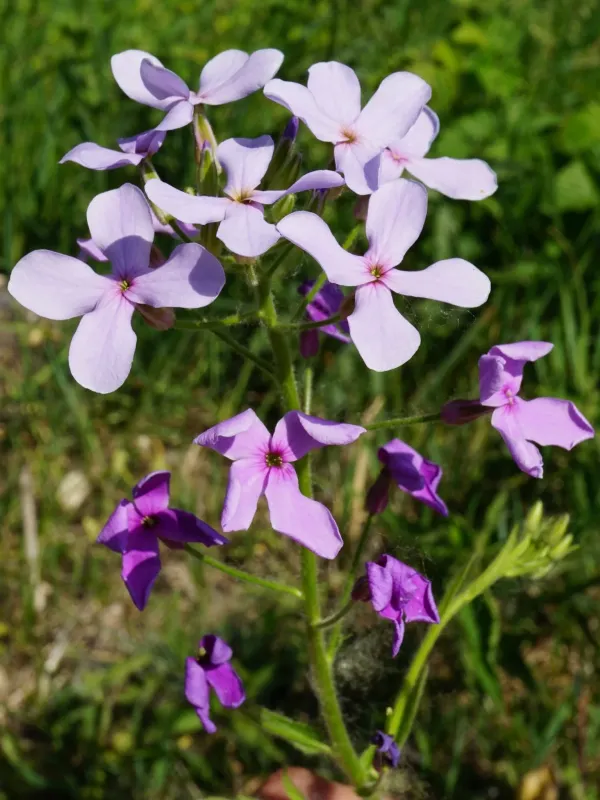
Description
Sowing dates
Hesperis sylvestris, as a biennial species, requires careful planning of the sowing season. The most successful results are typically achieved by sowing in early spring or late summer, allowing the plant to establish its rosette during the first season.
Seeds should be planted at a shallow depth of approximately 1 to 2 centimeters. Because the seeds are small, they require consistent moisture in the upper soil layer to germinate effectively without the risk of drying out.
In field production, a spacing of 45 centimeters between rows is recommended to provide adequate room for plant growth and to facilitate mechanical weeding. Maintaining proper plant density is crucial for healthy development.
Germination usually occurs within two weeks under favorable temperatures. Providing a firm seedbed is essential to ensure good soil-to-seed contact, which improves the overall rate of emergence.
Late summer sowing allows the plants to overwinter in the rosette stage. This period of cold exposure is often necessary to trigger uniform flowering in the following spring season.
Growing requirements
Belonging to the Brassicaceae family, this species thrives in fertile, well-drained loamy soils. Neutral soil pH is ideal, as highly acidic conditions can negatively impact nutrient uptake and overall biomass production.
Hesperis sylvestris requires a site with good sun exposure to reach its full flowering potential. While it can tolerate partial shade, insufficient light often results in elongated, weak stems that lack vigor.
Water management is a key factor in successful cultivation. While the crop requires moisture for active growth, it is highly sensitive to waterlogging, which can quickly lead to root decay and plant mortality.
Nutrient management focuses on balanced fertilization, particularly with adequate potassium levels to support flowering stems. Excessive nitrogen should be avoided to prevent susceptibility to pests and diseases.
Cultivation practices must include regular inter-row cultivation to keep the soil surface loose and free from weed competition. This promotes better aeration and moisture retention in the root zone.
Main diseases and pests
Crucifer flea beetles are the primary early-season pests that can rapidly damage seedlings. Early detection and immediate protective measures are necessary to ensure the survival of young plants.
The rapeseed blossom beetle may pose a threat during the budding phase, as larvae feed on developing flowers. This can significantly reduce the potential for seed harvest if the infestation is not managed.
Fungal diseases like powdery mildew can appear in warm, humid conditions. This condition is characterized by a white powdery layer on the leaves, which can reduce the photosynthetic capacity of the plant.
Root-related pathogens, especially those common to the cabbage family, require a strict rotation schedule. Planting Hesperis sylvestris in areas previously used for other Brassicaceae species should be avoided for several years.
- Crucifer flea beetle.
- Rapeseed blossom beetle.
- Powdery mildew.
- Downy mildew.
- Aphids.