
Hoary cress
Cardaria draba
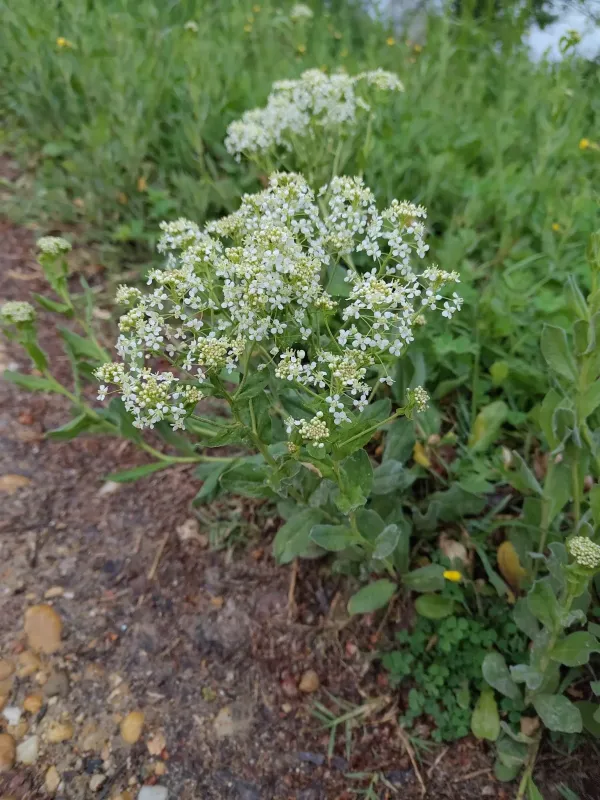
Description
Growing requirements
Hoary cress (Cardaria draba) is a deep-rooted, perennial, rhizomatous weed belonging to the Brassicaceae family. It is recognized globally as a highly invasive and persistent plant that can significantly reduce crop yields due to its aggressive growth habit.
The plant originates from Southeastern Europe and Western Asia. Over the centuries, it has naturalized in many regions across the globe, becoming a major challenge for cereal and vegetable production in temperate and steppe climates.
Botanically, it is characterized by its distinct white, cross-shaped flowers and greyish-green foliage, which gives the plant its name. The root system is extremely complex, capable of reaching deep into the subsoil, which provides the plant with superior drought tolerance.
Regarding soil requirements, hoary cress is incredibly versatile. It thrives in diverse conditions, including heavy clays, sandy soils, and alkaline or saline environments where many cultivated plants fail to establish.
Management requires rigorous field preparation. Chemical control is most effective when herbicides are applied during the bud stage, combined with mechanical tillage practices that deplete the starch reserves stored in the extensive root network.
Main diseases and pests
As a member of the Brassicaceae family, hoary cress shares many pests and diseases with essential crops such as canola and cabbage. This makes it a critical vector for maintaining pathogen populations throughout the season.
Common fungal pathogens affecting the plant include white rust and powdery mildew. These diseases can easily spread from the weed patches into commercial field borders, increasing the cost of fungicide applications.
Insects like flea beetles, cabbage aphids, and diamondback moths often utilize hoary cress as a primary food source or a shelter for overwintering, posing a continuous threat to nearby susceptible cash crops.
The plant acts as a reservoir for several viruses, which are then transmitted by insect vectors to economically valuable plants, causing stunted growth and significant yield losses in oilseed rape.
For sustainable crop health, producers should implement buffer zone management and utilize integrated pest management strategies to eliminate hoary cress from non-crop areas and minimize the risk of secondary pest infestations.