
Low braya
Braya humilis
Description
Growing requirements
Low braya (Braya humilis) is a perennial herbaceous plant belonging to the Brassicaceae family. It is a small, hardy species that has evolved to thrive in some of the most challenging environments on Earth, including high-latitude arctic regions and alpine zones.
The distribution of the species is mainly concentrated in North America, particularly across the northern parts of Canada and Alaska. It is typically found in open, rocky habitats, limestone barrens, and disturbed gravelly soils where competition from other plants is minimal.
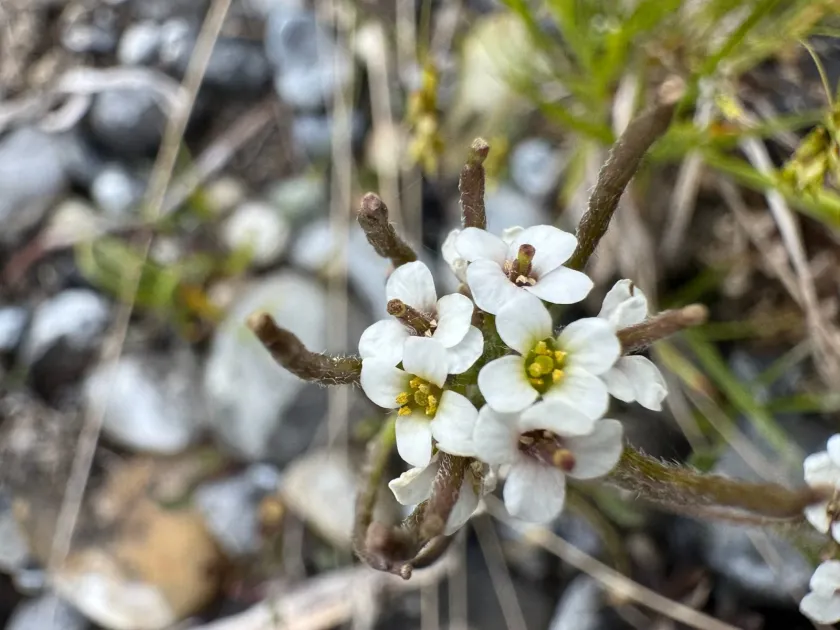
Botanically, Braya humilis is characterized by a basal rosette of leaves and an erect, often branching stem. The flowers are small, typical of the mustard family, usually appearing in colors ranging from white to light purple, and blooming during the brief arctic summer.
Regarding soil and climate, the plant requires excellent drainage and a high amount of sunlight. It is highly sensitive to waterlogged conditions, preferring well-aerated substrates that allow for efficient gas exchange in the root zone, often found on alkaline or calcareous outcrops.
While not a commercial crop, the plant holds significant value for botanical research, particularly in understanding how flora adapt to extreme cold and nutrient-poor environments. Conservation efforts are often focused on preserving its natural habitat against climate-induced changes.