
Phacelia congesta
Phacelia congesta Hook
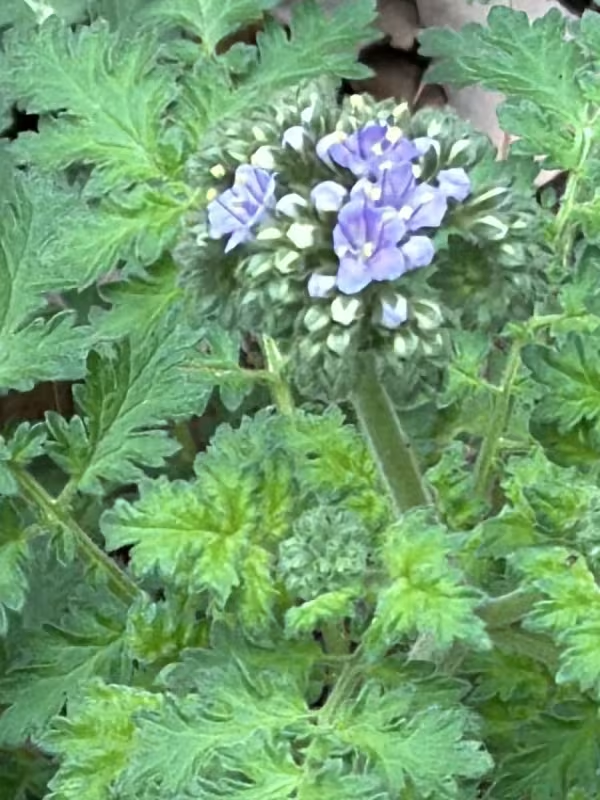
Description
Sowing dates
Phacelia congesta, a member of the Boraginaceae family, is a versatile crop typically sown in early spring when soil temperatures reach 5-8 degrees Celsius.
For optimal results, seeds should be sown in rows at a shallow depth of 1-2 centimeters, as the small seeds require minimal covering to germinate effectively.
Autumn or late winter sowing is also an option in temperate climates, allowing for early germination and vigorous blooming by the start of the summer season.
The recommended seeding rate is between 8 and 12 kilograms per hectare, ensuring a dense stand that effectively competes with unwanted weeds.
The plant exhibits rapid early development, allowing it to establish itself quickly and cover the ground, which is essential for effective soil management.
Growing requirements
Native to North America, Phacelia congesta is highly adapted to various environments, showing notable resistance to dry conditions and water scarcity.
The plant thrives in sunny locations with well-drained loamy or sandy soils, while it is sensitive to waterlogged or overly acidic soil conditions.
It displays good tolerance to light spring frosts, which broadens its potential planting window in regions with variable weather patterns.
Sunlight is a critical factor for successful blooming; therefore, planting in open, unshaded areas is recommended for maximum nectar production.
Phacelia has modest fertility requirements and grows effectively across various soil types, contributing to soil structure improvement through its root system.
Main diseases and pests
Phacelia congesta generally maintains strong resistance to common plant diseases, though excessive moisture may lead to powdery mildew or root rot issues.
Pests such as aphids may occasionally affect young shoots by feeding on plant sap, though their impact is typically minimal in healthy, vigorous stands.
In some cases, weevils may cause minor damage to the foliage, but these occurrences rarely warrant chemical intervention in field conditions.
Effective management strategies include crop rotation and maintaining weed-free fields, which reduces the potential for disease or pest harborages.
The plant is highly suitable for sustainable and organic farming practices due to its natural resilience and minimal need for pesticides.
Harvesting
Phacelia congesta is widely recognized for its high nectar value, making it an excellent choice for beekeeping and promoting pollinator biodiversity.
When used as a green manure, the crop should be mowed and incorporated into the soil during the full flowering stage to maximize biomass nutrient content.
Seed production harvesting is best timed when the seed pods begin to turn brown, ensuring they are gathered before excessive shattering occurs in the field.
The incorporation of green biomass into the soil enhances biological activity and nutrient cycling, benefiting the subsequent crops in the rotation.
As a predecessor crop, it is highly valued for its ability to leave the soil in a friable, well-structured condition, free from many common soil-borne pathogens.